How museums protect fragile art
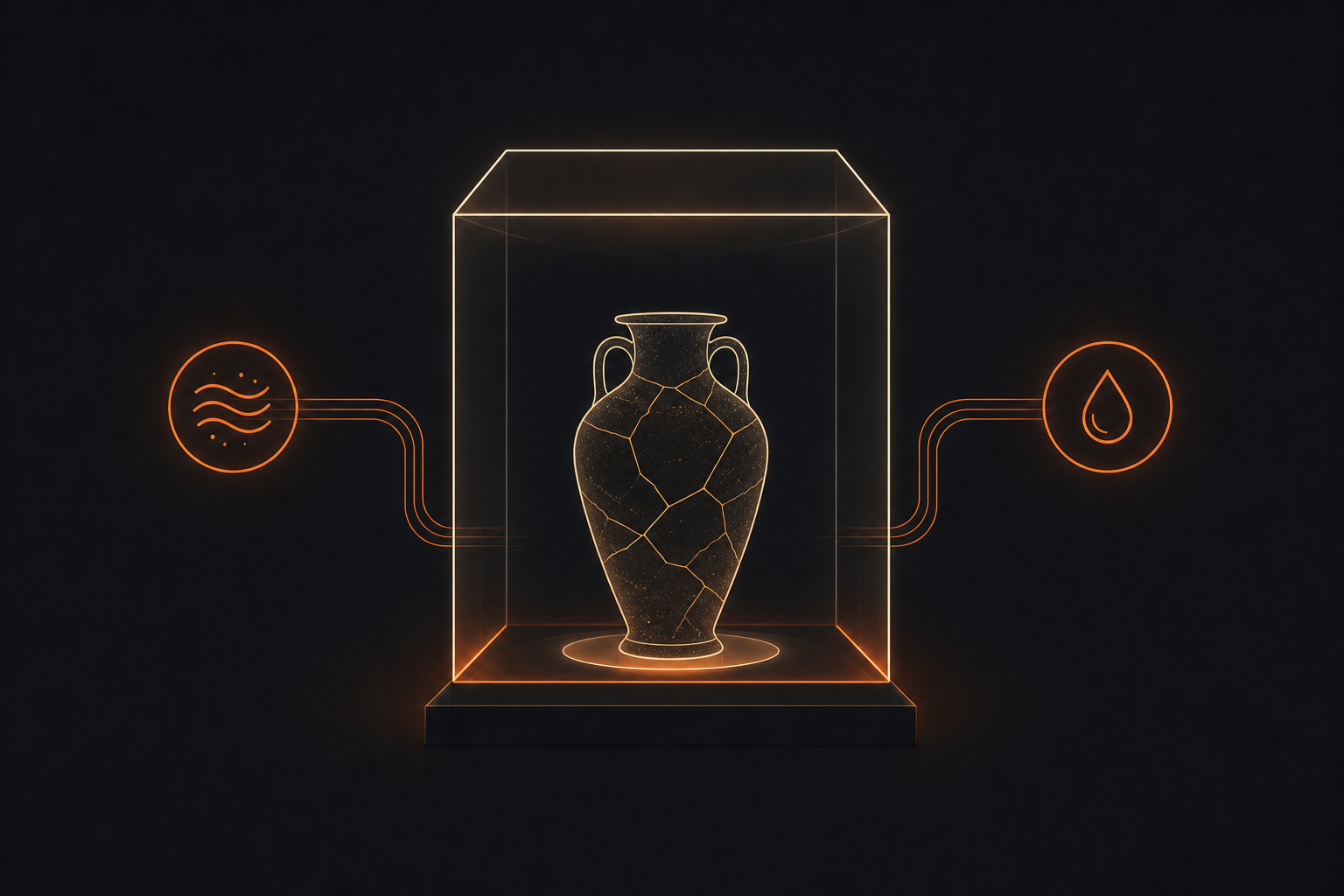
Museums keep fragile art safe by carefully controlling its environment, handling, and exposure to light.
Featured in the Thursday, September 10 edition →
It's often said that putting art behind glass makes it safe — in fact, the case is only one layer of protection, and the surrounding temperature, humidity, light, pollution, and handling still matter.
This work is shared by conservators, curators, registrars, security staff, and building engineers, usually within a museum’s broader duty to preserve objects for future visitors and researchers rather than simply display them.
A delicate artwork is like a cake that can melt, dry out, or get squashed: the museum keeps its room steady, covers it when needed, and moves it very gently.
Understanding these protections helps whenever people debate museum rules, ask why an exhibit is dimly lit, or wonder why a treasured object is sometimes removed from view.
Imagine a museum receiving a fragile paper drawing for an exhibit. Staff record its condition, move it in a padded container, place it in a case that limits dust and harmful light, and check the room and drawing during the show so they can respond if anything changes.
Light can cause permanent damage
Even ordinary light can gradually fade pigments and weaken paper, so museums limit brightness, filter ultraviolet radiation, and sometimes rotate sensitive works.
Stable conditions matter most
Small, repeated swings in temperature and humidity can make materials expand, shrink, crack, or warp, which is why steady conditions are often safer than chasing one perfect setting.
Handling follows a written plan
Staff use supports, gloves or clean hands when appropriate, limited routes, and condition reports so they can prevent damage and notice changes after an object is moved.