How Oil Reaches Your Local Gas Station
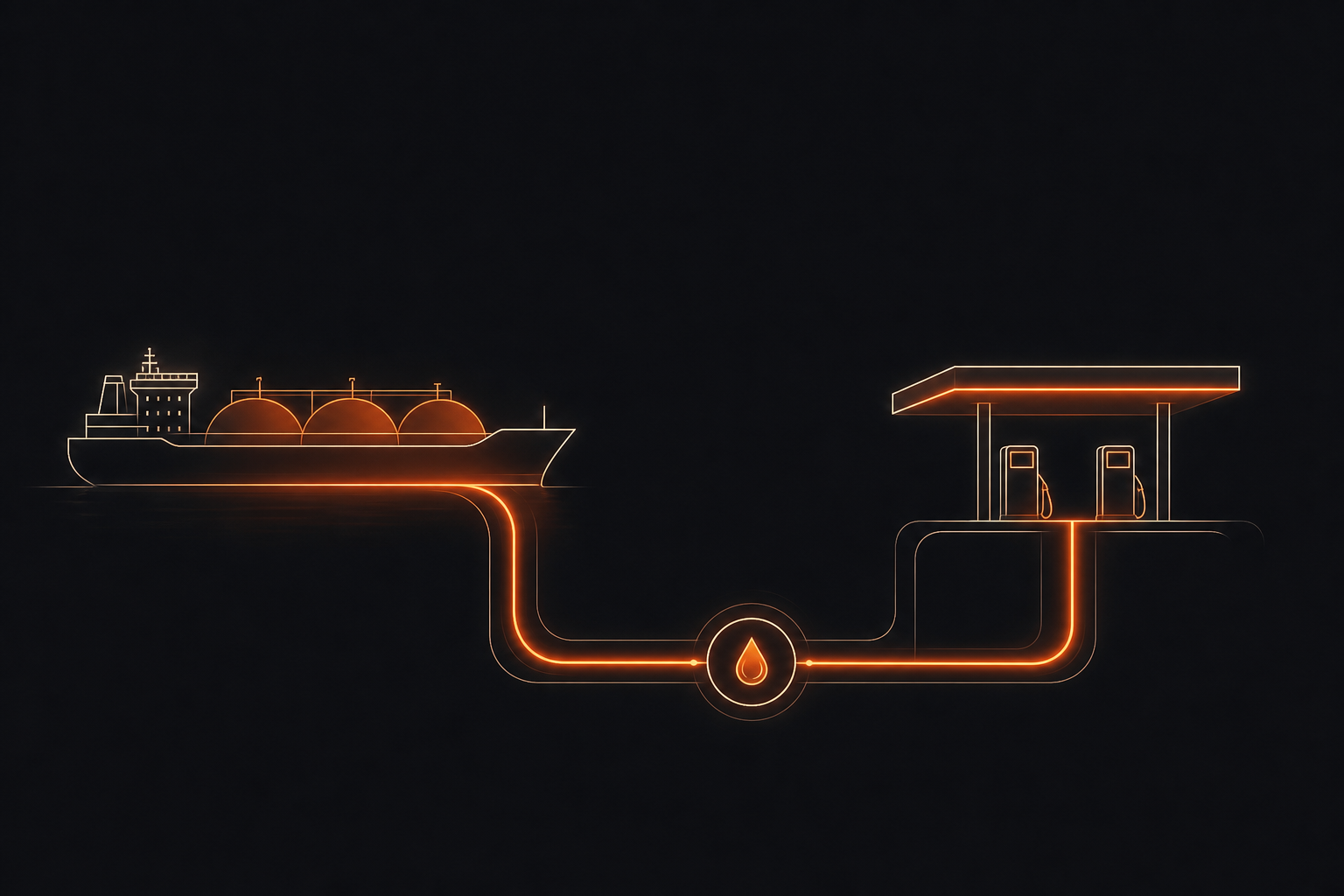
Tankers carry crude oil to refineries, where it becomes gasoline that moves through storage terminals, pipelines, and trucks before reaching a gas station.
Featured in the Monday, September 7 edition →
It's often said that tankers deliver gasoline straight to gas stations — in fact, most tankers carry crude oil to refineries, while finished fuel usually travels onward through terminals, pipelines, rail lines, or tanker trucks.
The journey is managed by a chain of oil producers, shipping companies, refiners, pipeline operators, fuel wholesalers, and station owners. Money changes hands at each step, with the pump price covering the fuel itself plus transport, taxes, operating costs, and profit.
Think of it like a giant cooking-and-delivery system: the tanker brings ingredients, the refinery turns them into a finished meal, and trucks deliver that meal to neighborhood stores.
Understanding the supply chain helps whenever people argue about fuel prices, shortages, refinery problems, or whether a local station can quickly replace fuel from another source.
Say a tanker unloads crude oil at a coastal port and the oil travels to a refinery by pipeline. The refinery processes it into gasoline, which is stored at a distribution terminal; a tanker truck then loads a compartment of that gasoline and delivers it to a station, where it enters underground storage before being pumped into cars.
Refineries make different fuel grades
Refineries produce fuels with different blends and octane levels, so a station receives gasoline that meets the requirements for its market and vehicles.
Terminals act as fuel warehouses
Storage terminals hold finished fuel between large shipments and local deliveries, helping supply continue even when a tanker or pipeline is not moving fuel at that moment.
The last mile uses trucks
Tanker trucks are flexible enough to serve individual stations because they can load fuel at a terminal and deliver separate products to several nearby locations.