Why Airlines Overbook Flights
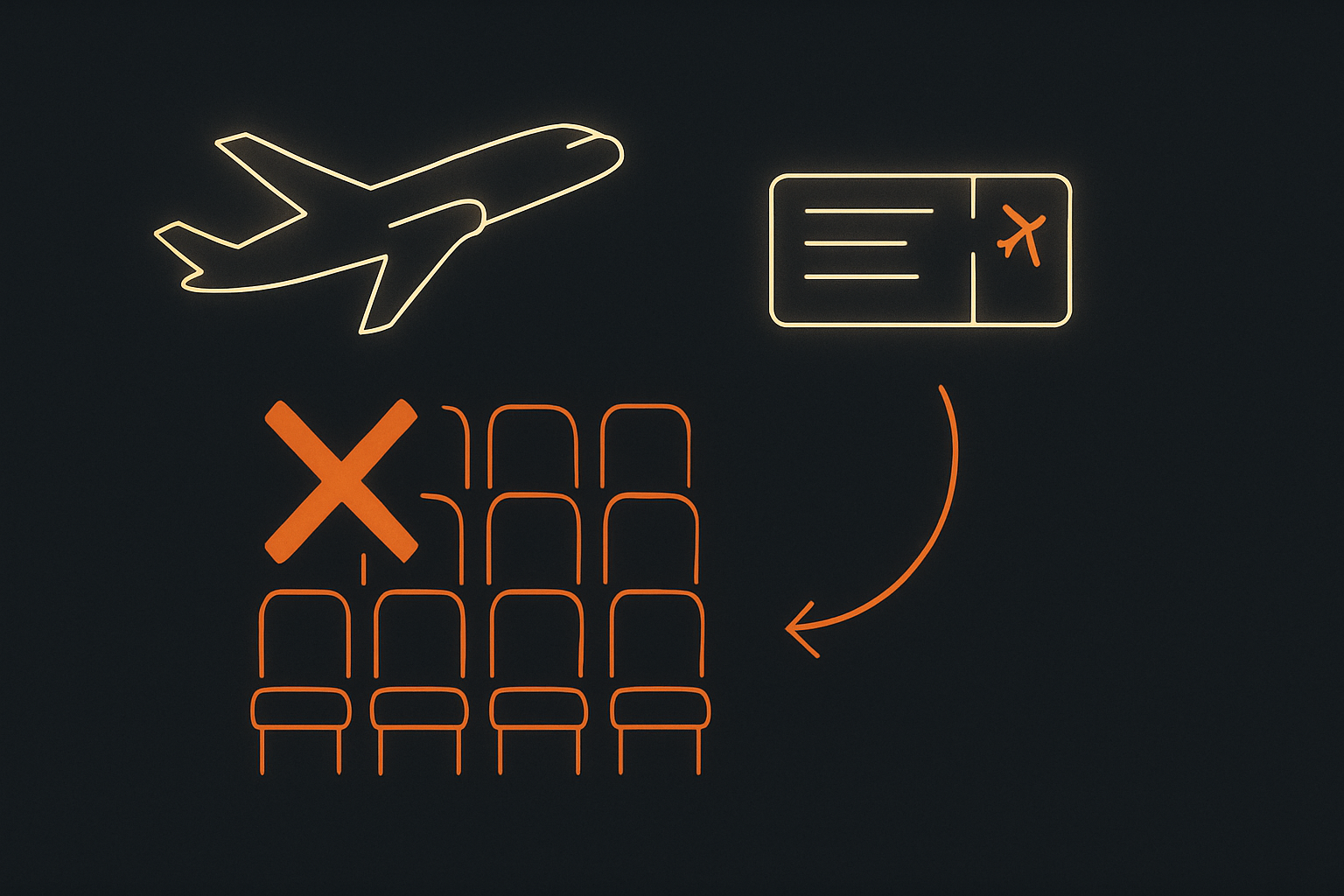
Airlines overbook flights to compensate for passengers who cancel or don't show up, ensuring planes fly as full as possible.
Featured in the Monday, August 10 edition →
It's often said that an overbooked flight guarantees someone will be bumped — in fact, enough passengers may cancel or miss the flight, or volunteers may solve the problem before anyone is required to give up a seat.
Overbooking helps airlines maximize revenue and keep ticket prices lower, but it can sometimes lead to passengers being bumped from flights.
It's like when you invite more friends than seats at your table because some might not come, so you still have a full table.
Knowing how overbooking works can help you make smarter choices when booking tight connections, important trips, or flights during busy travel periods. It also explains why arriving on time and checking in early can matter.
Say an airline has 100 seats and sells 105 tickets because it expects five people not to travel. If four people miss the flight, 101 passengers arrive, so the airline asks for a volunteer to take a later flight; once one person agrees, the remaining 100 passengers can board.
Airlines use past patterns
Airlines look at how often people on similar flights tend to cancel or miss their trip, then use those patterns to decide how many extra tickets to sell.
Volunteers usually come first
When too many passengers arrive, airlines often ask for volunteers to take a later flight in exchange for perks such as travel credit or other compensation.
Your fare can affect options
The type of ticket you buy, when you check in, and whether you have a seat assignment can affect how easily the airline can move you if a flight is full.