How Airports Spot Drones
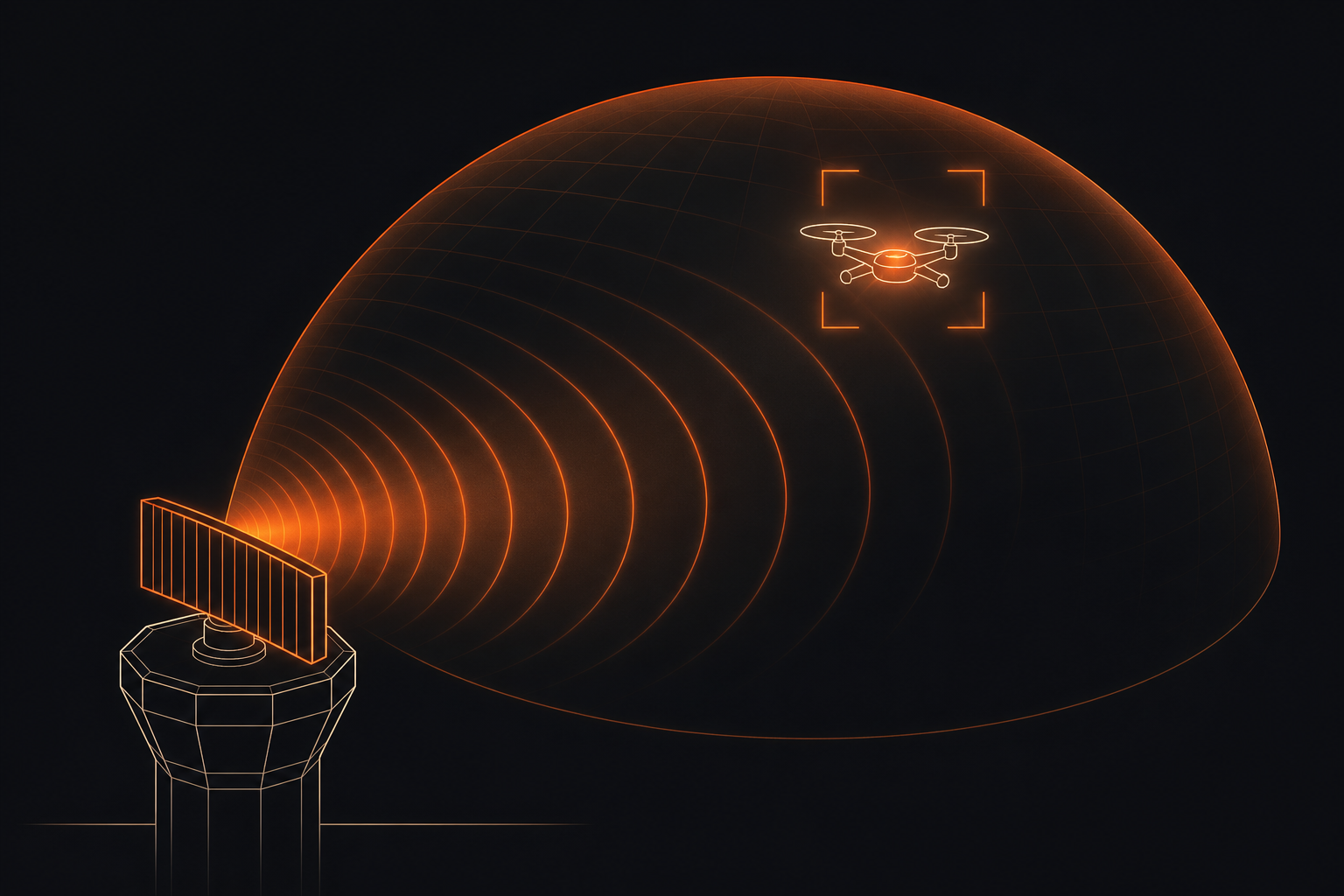
Airports detect drones by combining radar, radio-signal sensors, cameras, and sometimes sound detectors to find and identify small aircraft near restricted airspace.
Featured in the Tuesday, September 1 edition →
It is often said that radar cannot see drones because they are too small — in fact, specialized systems can detect some drones, although buildings, weather, birds, and the drone’s size can make identification difficult.
Airport authorities, air-traffic teams, and security agencies may share information from these systems, which are part of a larger effort to protect runways and keep unauthorized aircraft away from busy airspace.
It is like using several senses at once: one tool listens for a drone’s radio, another watches the sky, and another checks whether a moving dot has the shape and behavior of a drone.
This matters whenever drones appear near airports or lawmakers and communities debate drone rules, because detection helps distinguish a harmless aircraft from a safety risk and supports a coordinated response.
Say a drone approaches a restricted area: a radio sensor may notice its control link, radar may track a small moving object, and a camera may zoom in to check its shape. Software or an operator then compares those signals before alerting airport security, rather than treating every unidentified speck as a confirmed drone.
Different sensors cover gaps
Radio sensors can miss autonomous drones, while cameras can struggle at night or in poor weather, so airports combine tools instead of relying on one detector.
Detection is not identification
A sensor may show that something is moving through the air, but staff still need other evidence to determine whether it is a drone, a bird, or another aircraft.
Location matters most
The same drone can be a minor concern outside controlled airspace but a serious operational problem near a runway, where even a small object can disrupt aircraft movements.