What Happens Inside a Data Center
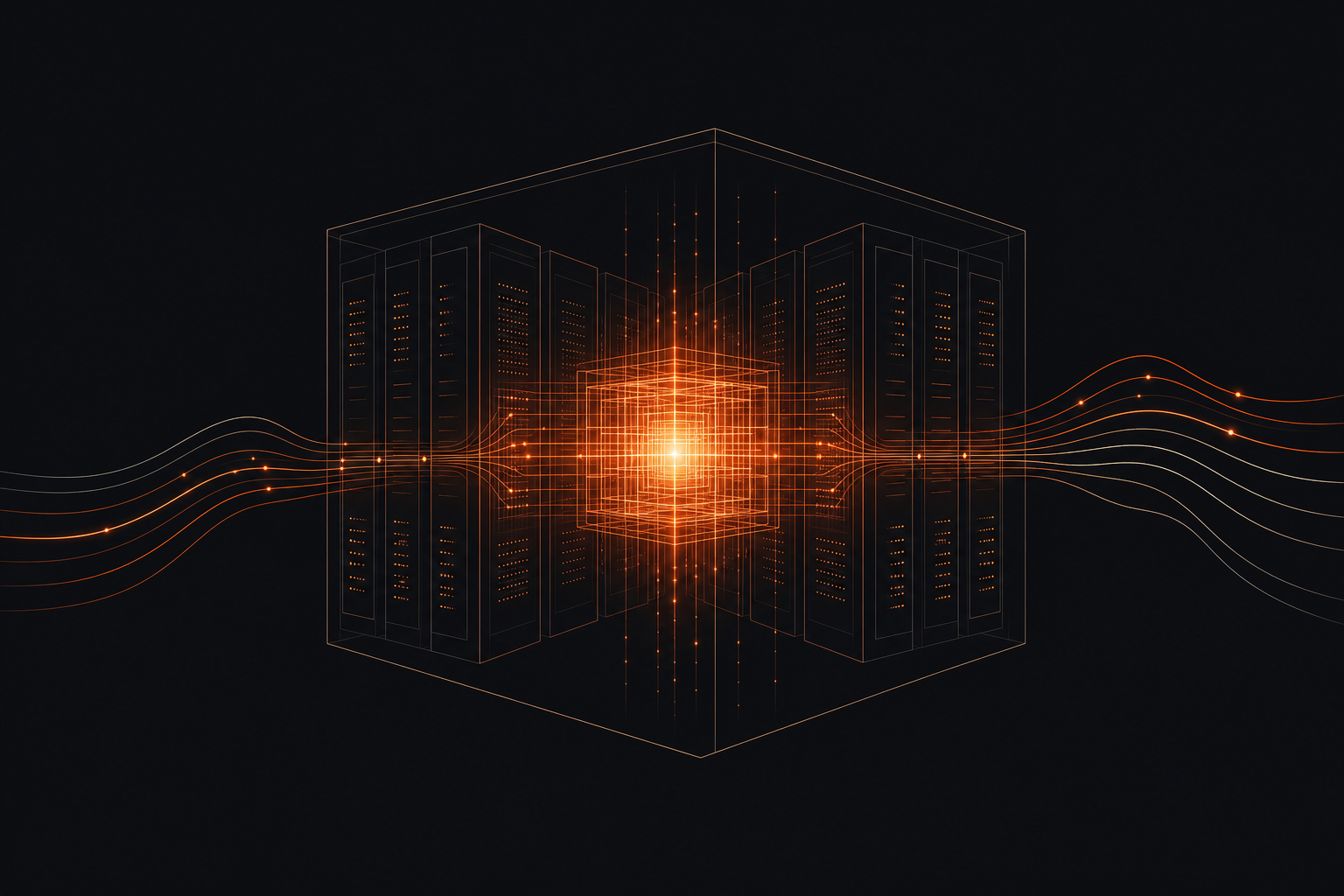
A data center keeps computers, storage systems, and networking equipment running so they can process requests and deliver digital services reliably.
Featured in the Wednesday, September 9 edition →
It's often said that the cloud is somewhere intangible — in fact, it is software and data running on physical computers in buildings like these.
Data centers are operated by cloud companies, internet providers, governments, universities, and businesses, and they turn electricity, buildings, hardware, and network connections into services people pay to use. They form the physical foundation beneath websites, streaming, online shopping, artificial intelligence, and many workplace tools.
Imagine a giant library where computers are the librarians, shelves hold information, and strong fans keep everything from getting too hot. When you ask an app for something, the computers find it and send it back to you.
Understanding data centers helps whenever people debate cloud computing, artificial intelligence, online privacy, or the environmental cost of digital services. It also clarifies why an internet service can fail even when your own phone or computer is working normally.
Suppose you open a photo app and request one picture. Your request travels through networks to a data center, where a computer identifies the account and storage system holding the image, retrieves the needed data, and sends it back to your device. If one machine is busy or fails, other systems may handle the request so the service can keep working.
Cooling is part of computing
Fans, air-handling equipment, and sometimes liquid-cooling systems remove heat produced by the machines so they can operate safely.
Backups reduce the damage
Data is often copied across storage systems or locations so a failed drive, power problem, or building outage does not automatically erase it.
Security happens in layers
Physical access controls, network defenses, software permissions, and monitoring work together to limit who can reach equipment or data.