Why Knuckleballs Are Hard to Hit
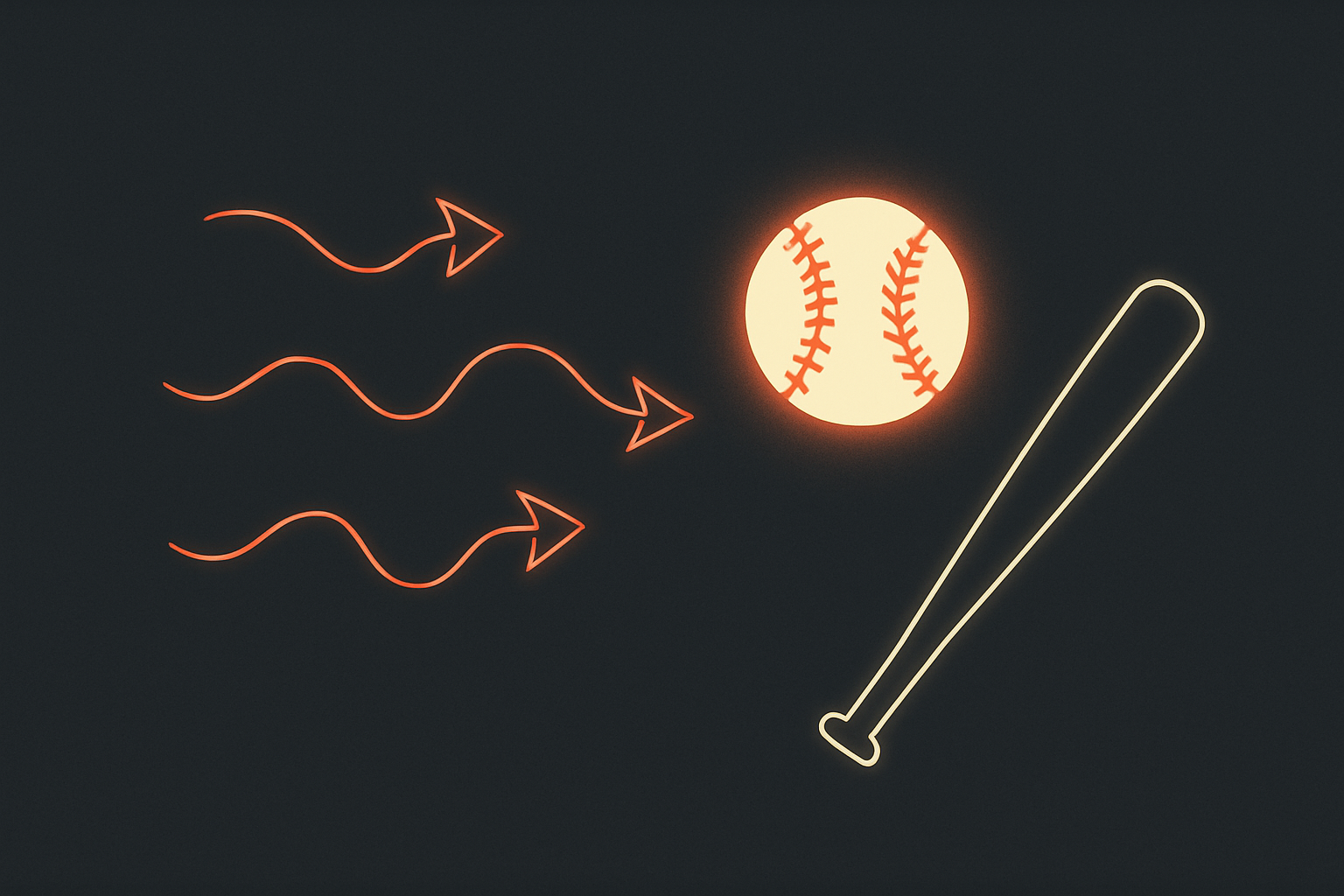
A knuckleball is hard to hit because it moves unpredictably in the air due to its minimal spin, confusing the batter's timing and swing.
Featured in the Monday, August 10 edition →
It's often said that a knuckleball must be thrown with literal knuckles — in fact, pitchers may use their fingertips or fingernails to hold the ball and keep it from rotating much.
The knuckleball's unique flight challenges batters and adds an exciting, strategic element to baseball, showing how physics can influence sports performance.
Imagine throwing a paper airplane that wobbles and changes direction suddenly instead of flying straight; that's like a knuckleball in baseball, making it tricky to catch or hit.
Knowing why a knuckleball behaves so differently can change how you watch a pitcher-batter matchup: the challenge is often less about raw speed and more about reading the ball early enough to swing well.
A batter sees a knuckleball leave the pitcher's hand headed toward the middle of the plate and begins a swing based on that early path. During its flight, the ball shifts toward the outside edge, so the bat reaches the expected spot instead of the ball's final spot, producing a weak foul or a miss. The problem was not simply slow reaction time; the batter had to commit before the final path was clear.
The seams steer the ball
With very little spin to smooth its path, the ball's raised seams can catch the air differently from moment to moment and nudge it in changing directions.
Even pitchers cannot fully predict it
A knuckleball pitcher can aim for the strike zone, but the exact late movement is difficult for anyone to control perfectly.
Catching it is tricky too
Catchers also have to react quickly to the ball's sudden movement, which can make receiving a knuckleball harder than catching a more predictable pitch.