Why AI Needs Powerful Computers
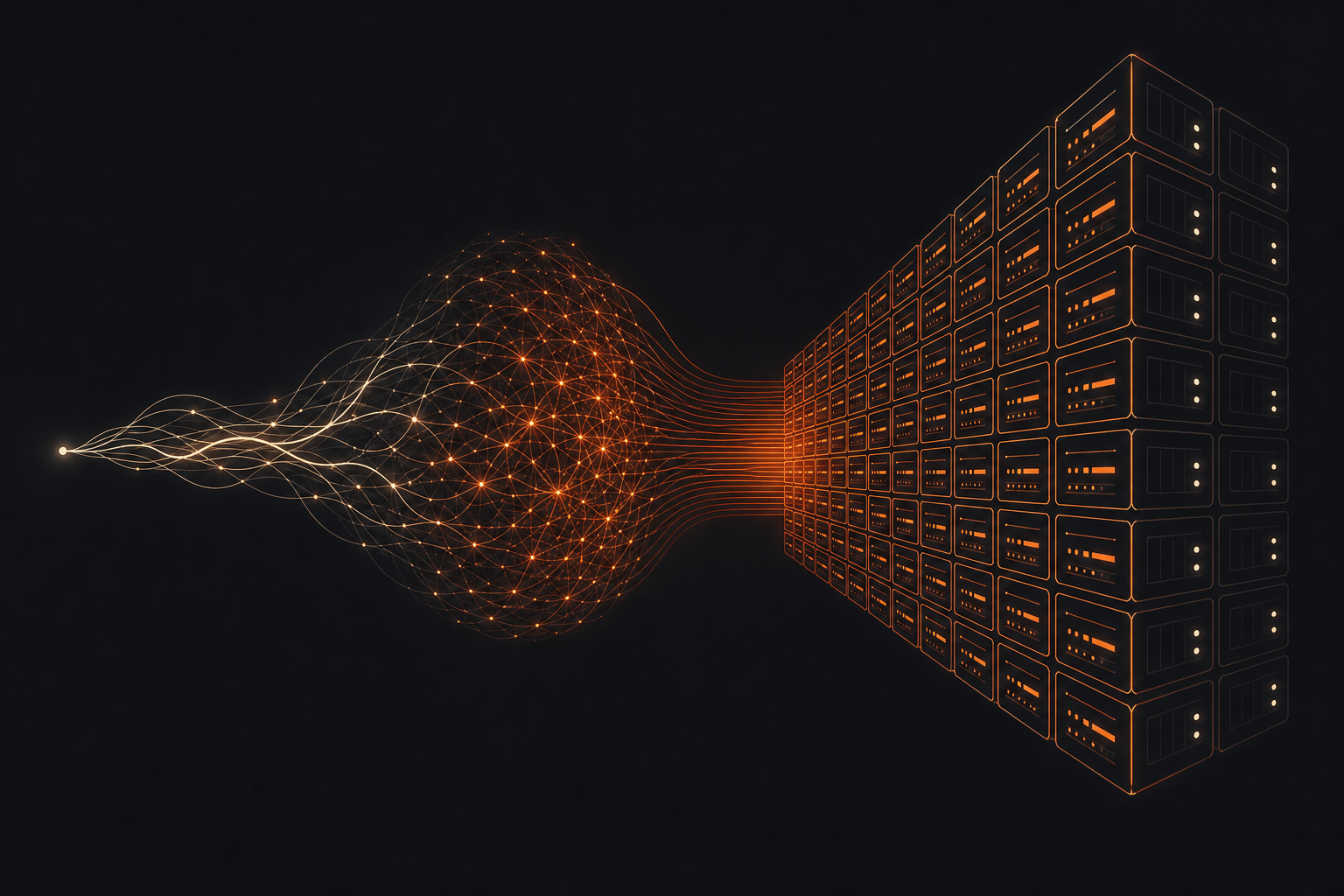
AI systems need powerful computers because they perform huge amounts of math on vast datasets, often all at once, to learn patterns and produce answers.
Featured in the Tuesday, August 25 edition →
It's often said that once an AI model has been trained, answering a question takes no computer power — in fact, each answer still requires calculations, although usually less work than training the model.
The computing needed for AI shapes who can build advanced systems and how much energy, hardware, and money they require. It also explains why AI services usually run in large data centers rather than on a single ordinary computer.
Imagine teaching a robot by showing it millions of pictures while it checks many tiny clues in each one; powerful computers let it do that checking quickly and repeatedly.
Understanding the computing behind AI makes it easier to judge claims about speed, cost, privacy, and whether a device can run a model locally or needs an internet connection.
Imagine a phone photo app that identifies a plant: it loads the model, turns parts of the picture into numbers, and passes those numbers through the model to produce a likely label. If the model fits in the phone's available memory, this can happen on the device; otherwise, the app may send the task to a remote computer and receive the result. The choice affects how much the phone's battery, hardware, and internet connection matter.
Training uses repeated calculations
During training, the system adjusts enormous sets of numerical settings again and again so its predictions gradually become more accurate.
Memory matters as much as speed
A computer must keep the model, example data, and temporary calculations available at once, so limited memory can slow or prevent a task even when the processor is fast.
Different chips share the workload
AI workloads are often split across specialised chips because many small calculations can run simultaneously instead of waiting in a long one-by-one queue.