How planes can lose altitude quickly
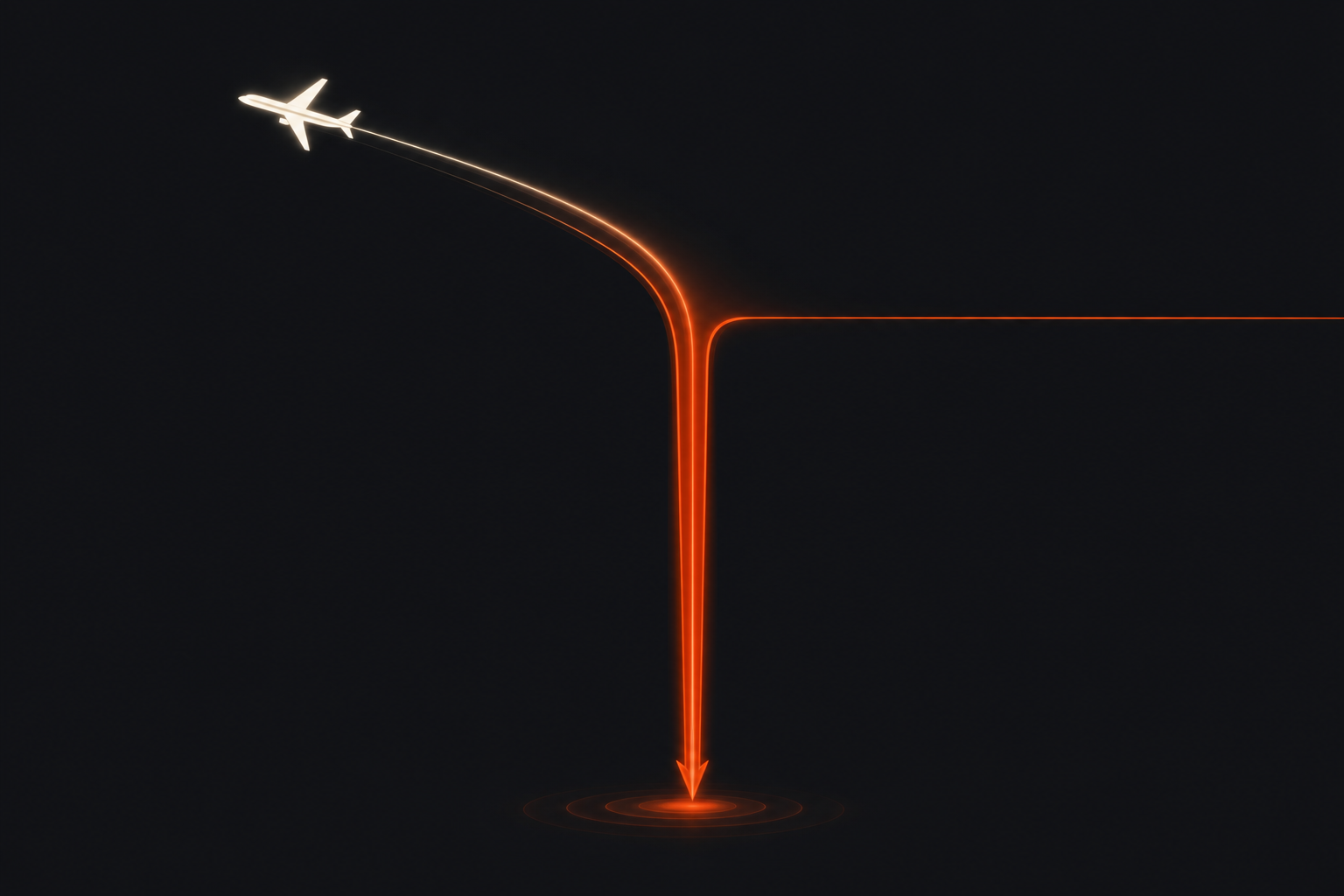
A plane can descend rapidly by lowering its nose and reducing engine thrust, while its pilots keep airspeed and control within safe limits.
Featured in the Monday, October 5 edition →
It’s often said that a plane loses altitude simply because its engines stop — in fact, an aircraft can glide and descend under control, and even a rapid descent is not automatically a fall.
Pilots, airlines, and air-traffic controllers coordinate descents as part of the larger air-traffic system, often to reach a lower cruising level or prepare for landing. The plane’s computers can help manage the path, but the crew remains responsible for keeping the aircraft within its operating limits.
Imagine riding a bicycle downhill: pointing downward makes you lose height, while braking keeps your speed from getting too high. A plane does something similar, using its controls and engines to choose how quickly it descends.
Understanding the difference between a controlled descent and a loss of control helps whenever passengers hear about a steep drop, turbulence, or an emergency descent and want to judge what those words actually mean.
Imagine a plane flying at 30,000 feet that is instructed to descend to 25,000 feet. The pilots lower the nose, adjust thrust, and monitor speed while the aircraft follows a downward flight path; if it descends at 5,000 feet per minute, the hypothetical change would take about one minute.
Speed and height trade places
As the aircraft’s flight path tilts downward, gravity helps it maintain speed while it gives up altitude, so pilots adjust pitch and thrust to prevent an unsafe acceleration.
Air brakes can steepen descent
Spoilers or speed brakes disrupt some of the wing’s lift and add drag, allowing the aircraft to descend faster without simply pointing its nose sharply downward.
Emergency descents follow procedures
When cabin pressure is lost, pilots may descend quickly toward a safer altitude while using oxygen equipment and coordinating with air traffic control.