How Planes Stop After Landing
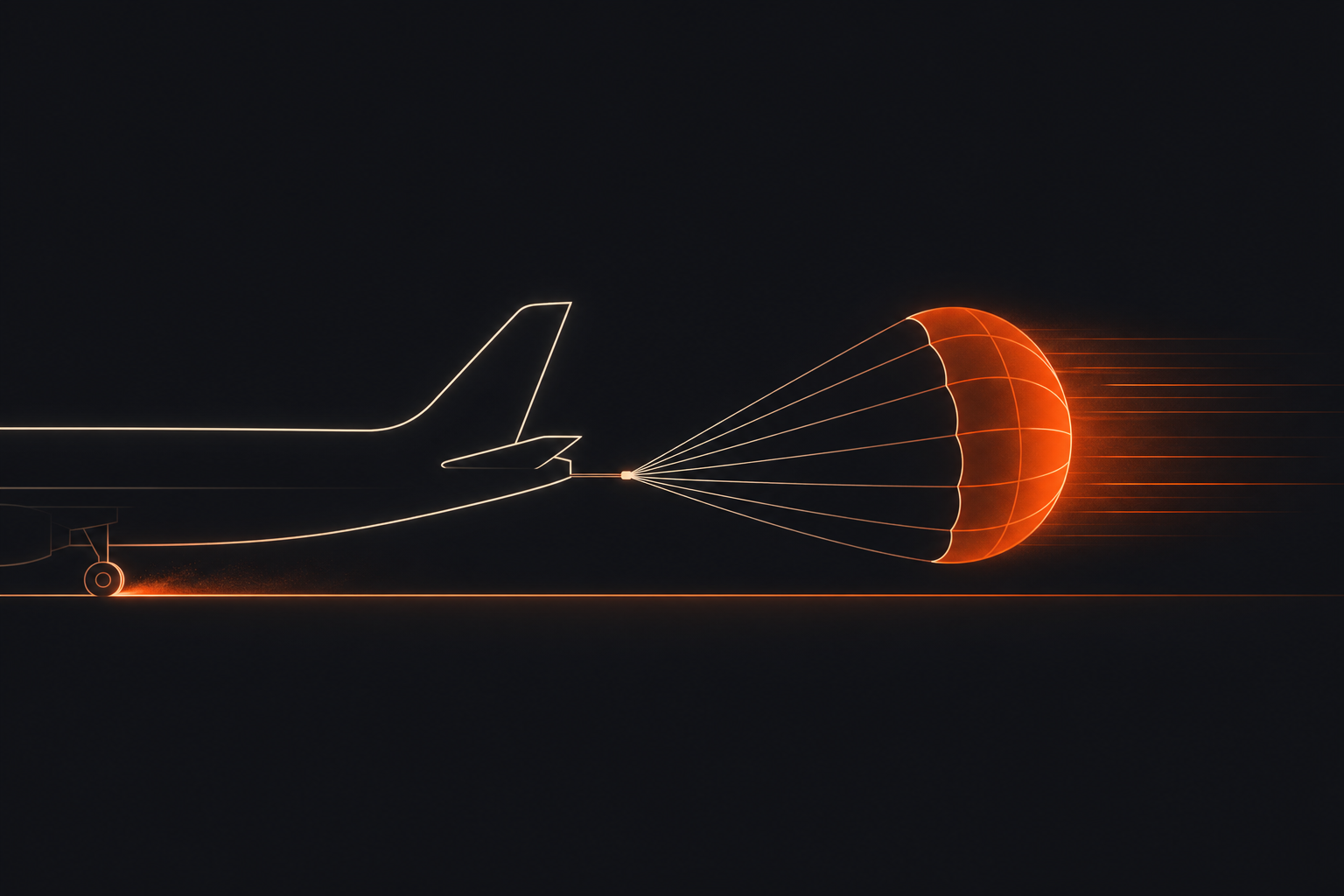
After touchdown, a plane slows through wheel brakes, spoilers, and reverse thrust, with runway friction helping bring it safely to a stop.
It's often said that reverse thrust does most of the stopping — in fact, wheel brakes and runway friction provide much of the stopping force once the plane is firmly on the ground.
Stopping is a coordinated job shared by the flight crew, the aircraft’s braking systems, and the airport’s runway design and maintenance. Airlines pay to maintain the tires, brakes, and engines, while airports manage the pavement and safety area beyond it.
It is like stopping a bicycle: the rider uses the brakes, but also stops pedaling and lets air resistance help. A plane does the same thing with its wheel brakes, raised panels, and engines.
Understanding the process helps whenever people wonder why a landing feels loud, why planes use long runways, or why wet and icy conditions change how aircraft operate.
Imagine a plane touches down with plenty of runway ahead: the pilot lowers panels called spoilers to reduce lift, applies the wheel brakes, and uses reverse thrust to help slow the rolling aircraft. As its speed falls, the pilot reduces the reverse thrust and continues braking until the plane can turn off the runway.
Spoilers press the plane down
Panels on the wings rise after touchdown, reducing lift so more of the plane’s weight rests on the wheels and the tires can grip the runway.
Brakes share the workload
The aircraft’s antiskid system adjusts braking pressure to help prevent the wheels from locking, much like an automobile’s antilock brakes.
Runway conditions matter
Water, snow, ice, or rubber buildup can reduce tire grip, so crews use runway-condition information when planning their landing and braking.