Why airport liquids must be tiny
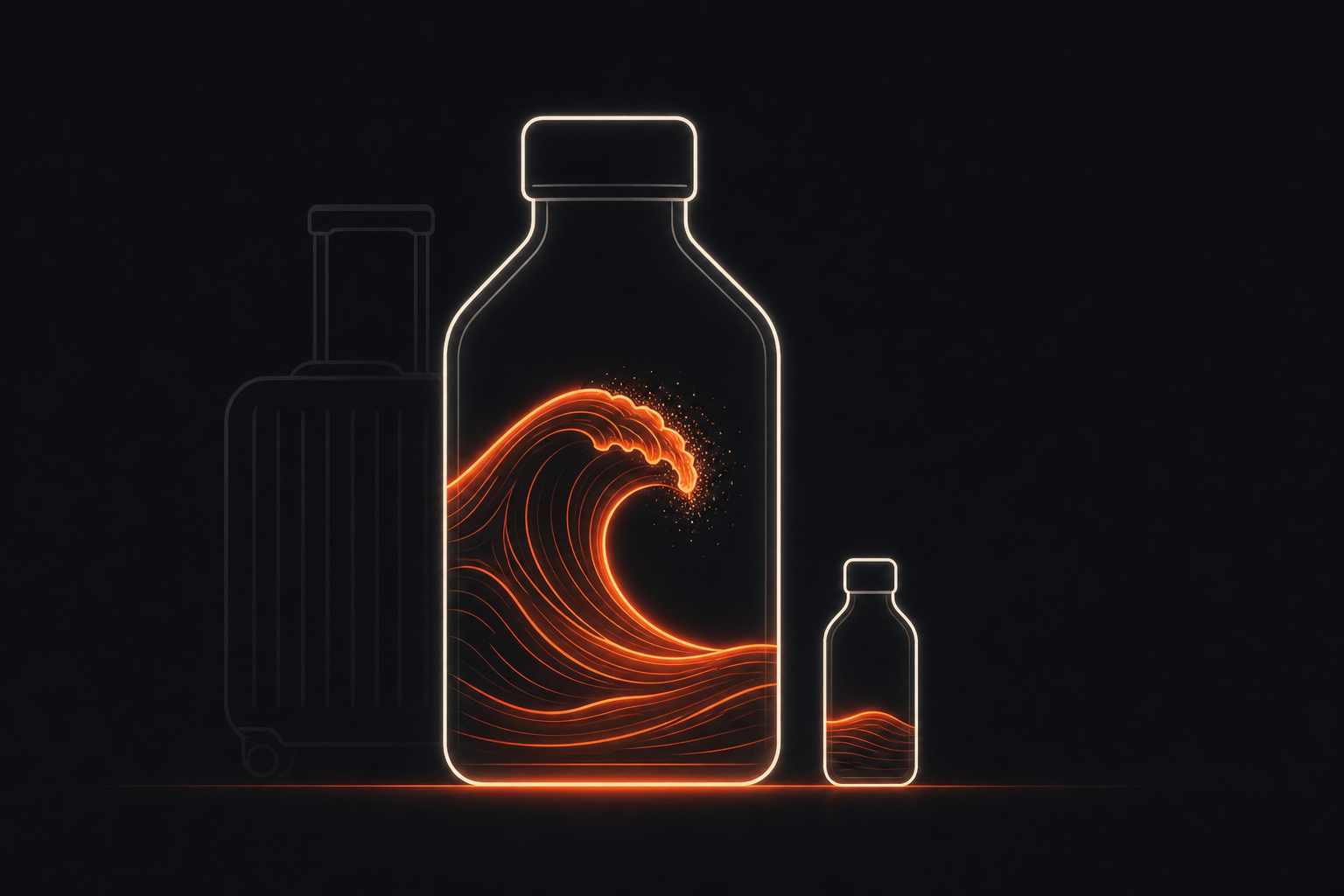
Airport liquid limits make screening simpler and reduce the amount of potentially dangerous material someone could carry, so containers must be small and fit in one clear bag.
It is often said that “liquid” means only pourable drinks—in fact, gels, creams, pastes, and aerosols may be grouped with liquids because they can behave similarly during screening.
Liquids are harder for security scanners to identify than solid objects because many harmless and harmful liquids can look similar. The rule is a practical safety trade-off between careful checking and keeping airports moving.
It is like asking everyone to bring snacks in small, see-through boxes so a teacher can check them quickly instead of opening a huge backpack full of mystery bottles.
Understanding the rule helps explain why a normal-size bottle may be stopped even when its contents are harmless, and why some airports may use different screening procedures or exemptions.
Suppose Lina buys a large bottle of perfume from a shop after security and receives it in a sealed security bag with her receipt. She keeps the bag sealed during a connection, where officers can verify the purchase and screen it again if required; opening it beforehand could mean it no longer qualifies for that procedure.
Container size matters separately
A partly empty large bottle can still be rejected because security rules generally judge the container’s capacity, not just how much liquid remains inside.
Exceptions cover essential liquids
Medicine, baby milk, and similar necessities can often follow separate procedures, but passengers may need to declare them for additional screening.
The bag speeds up inspection
Putting small containers together in a clear, accessible bag lets officers and screening equipment examine them more consistently than scattered bottles in luggage.