How Seafood Reaches Your Plate
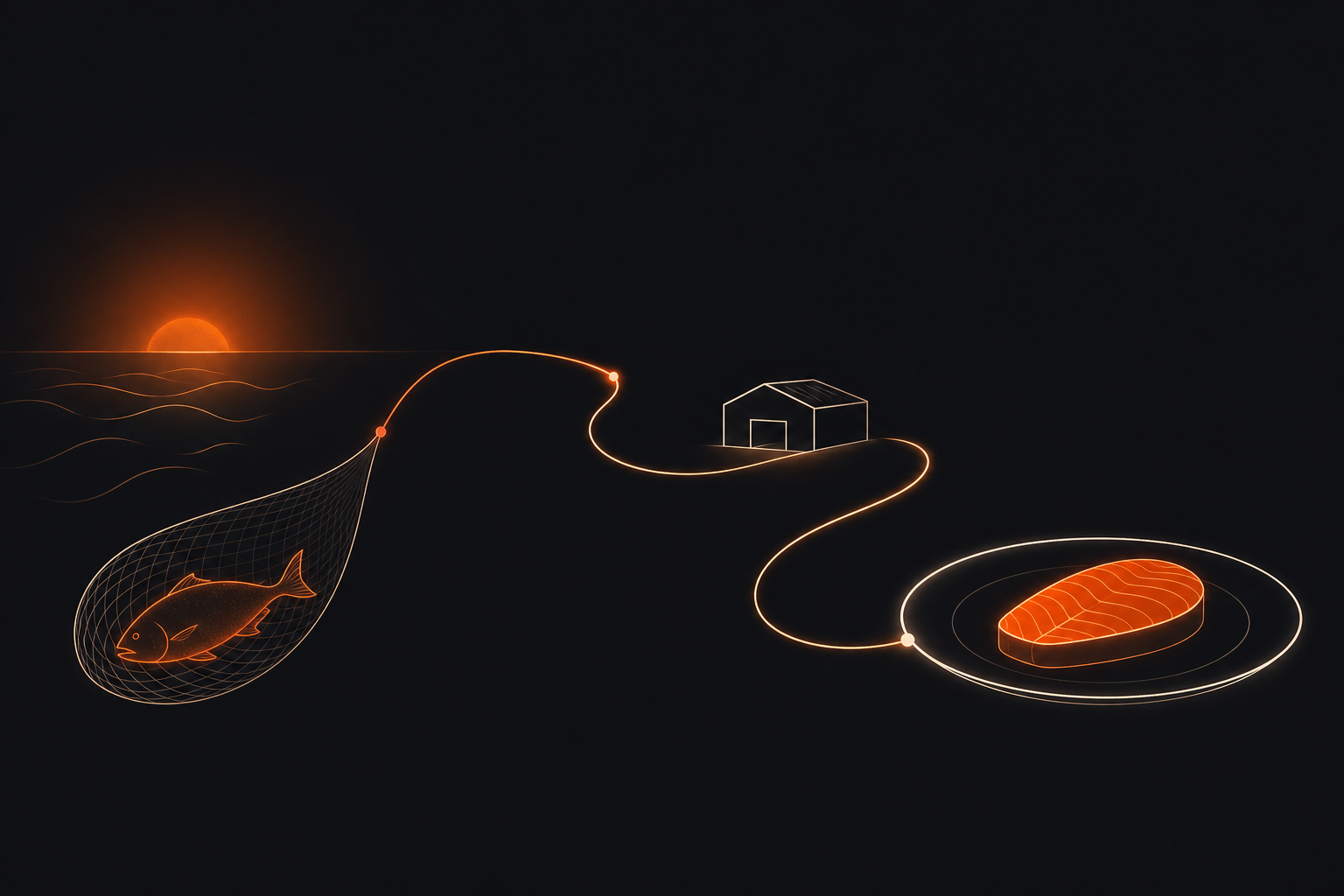
Seafood travels through a chain of harvesting, handling, processing, transport, and selling before it reaches your plate.
It's often said that seafood usually goes straight from a boat to a shop — in fact, it commonly passes through several handlers for sorting, inspection, processing, packing, and distribution.
This chain connects oceans and fish farms to a global food system run by fishers, aquaculture companies, processors, wholesalers, retailers, restaurants, and regulators. The money is divided among those businesses, with the final price also covering equipment, fuel, labor, storage, transport, waste, and oversight.
Think of seafood like a relay race: fishers start the race, and boats, processors, trucks, stores, and restaurants pass the seafood along while keeping it cold and safe.
Understanding the chain helps whenever people discuss seafood prices, sustainability, food safety, or whether a product is wild-caught or farmed.
Say a boat lands a catch at a port: the seafood is checked, sorted, and sold to a buyer, who may send it to a processor for cleaning and packaging. A refrigerated carrier then moves the packages to a wholesaler, which supplies a grocery store or restaurant. The store or restaurant keeps it chilled, prepares it, and sells it to the customer.
Landing starts the paperwork
At the first sale, the catch can be weighed, graded, recorded, and linked to information about where and how it was harvested.
Processing changes the product
Workers may remove shells, bones, scales, or unwanted parts, then freeze, can, smoke, dry, or otherwise prepare the seafood for its destination.
Cold storage slows spoilage
Refrigeration or freezing at each handoff helps control bacteria and quality, making temperature management a key part of the journey.