Why Laundry Sometimes Shrinks
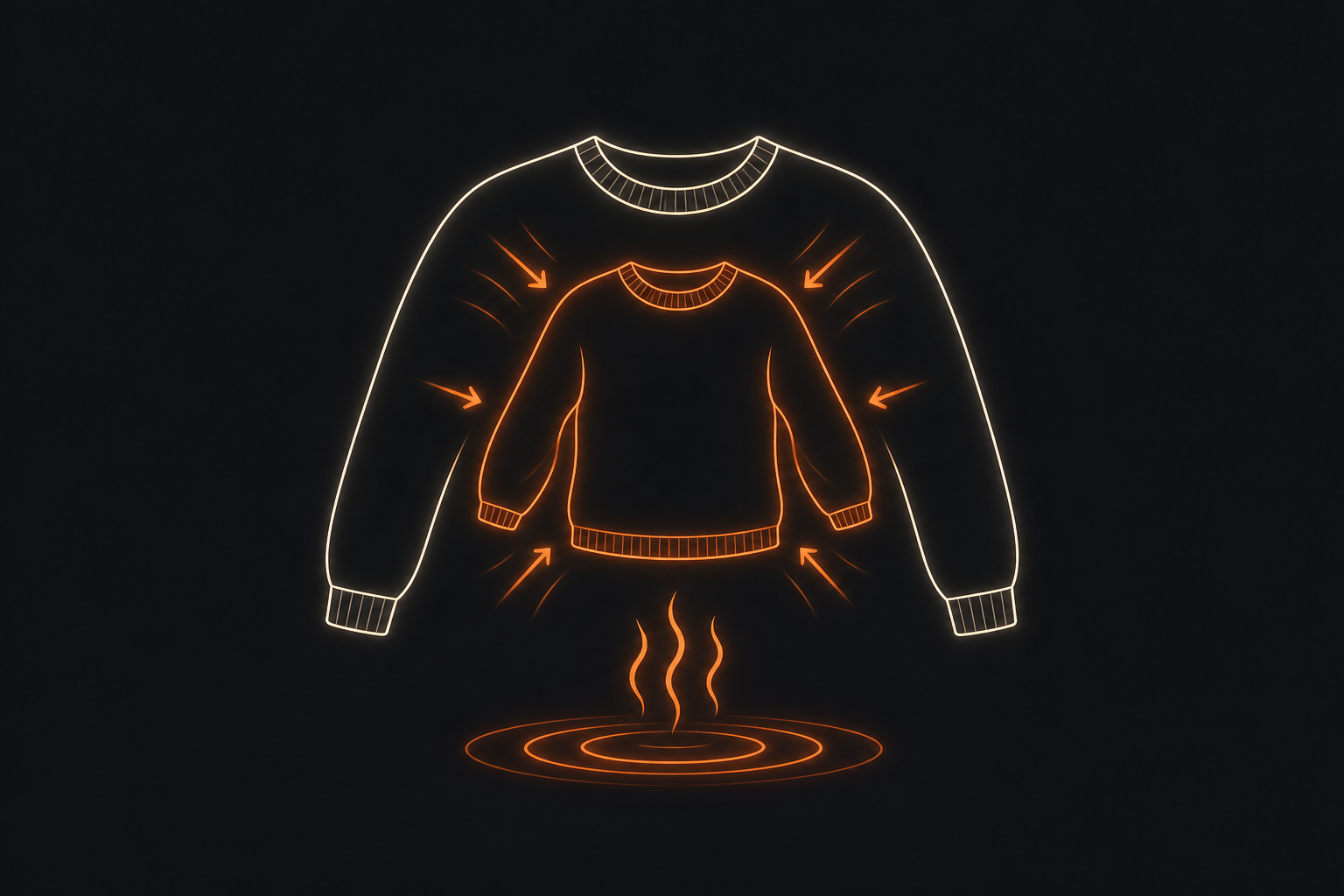
Laundry shrinks when heat, moisture, and movement make the fibers tighten or the fabric structure draw closer together.
Featured in the Monday, August 10 edition →
It's often said that cold water makes shrinkage impossible—in fact, it lowers the risk for many garments but cannot guarantee the original fit, especially if the garment is later dried with strong heat.
Shrinkage depends on the material and how it was made, so two garments washed together can change size differently. Care labels are meant to limit these changes by matching washing and drying conditions to the fabric.
Think of fabric like a loose net made of tiny strings: hot, wet washing and tumbling can make the strings curl up and pull the net smaller.
Knowing what causes shrinkage helps you choose safer washing habits, avoid damaging favorite clothes, and understand why a garment may fit differently after laundering.
Suppose a wool sweater is washed warm, rubbed repeatedly, and then tumbled dry. Moisture and heat let its surface fibers catch and tighten as the drum moves them around. When the sweater comes out, the sleeves and body may be shorter because the yarns have settled into a tighter structure.
Natural fibers shrink most readily
Cotton, wool, and other animal or plant fibers can tighten as their internal structure relaxes during washing and drying.
Dryers add the strongest stress
High heat combined with repeated tumbling can pull fabric fibers and yarns closer together more aggressively than gentle air drying.
Fit can change unevenly
A garment may shrink more in length, width, or one section than another because its fibers, seams, and knit or woven construction respond differently.