Who Earns Money When Music Plays Publicly
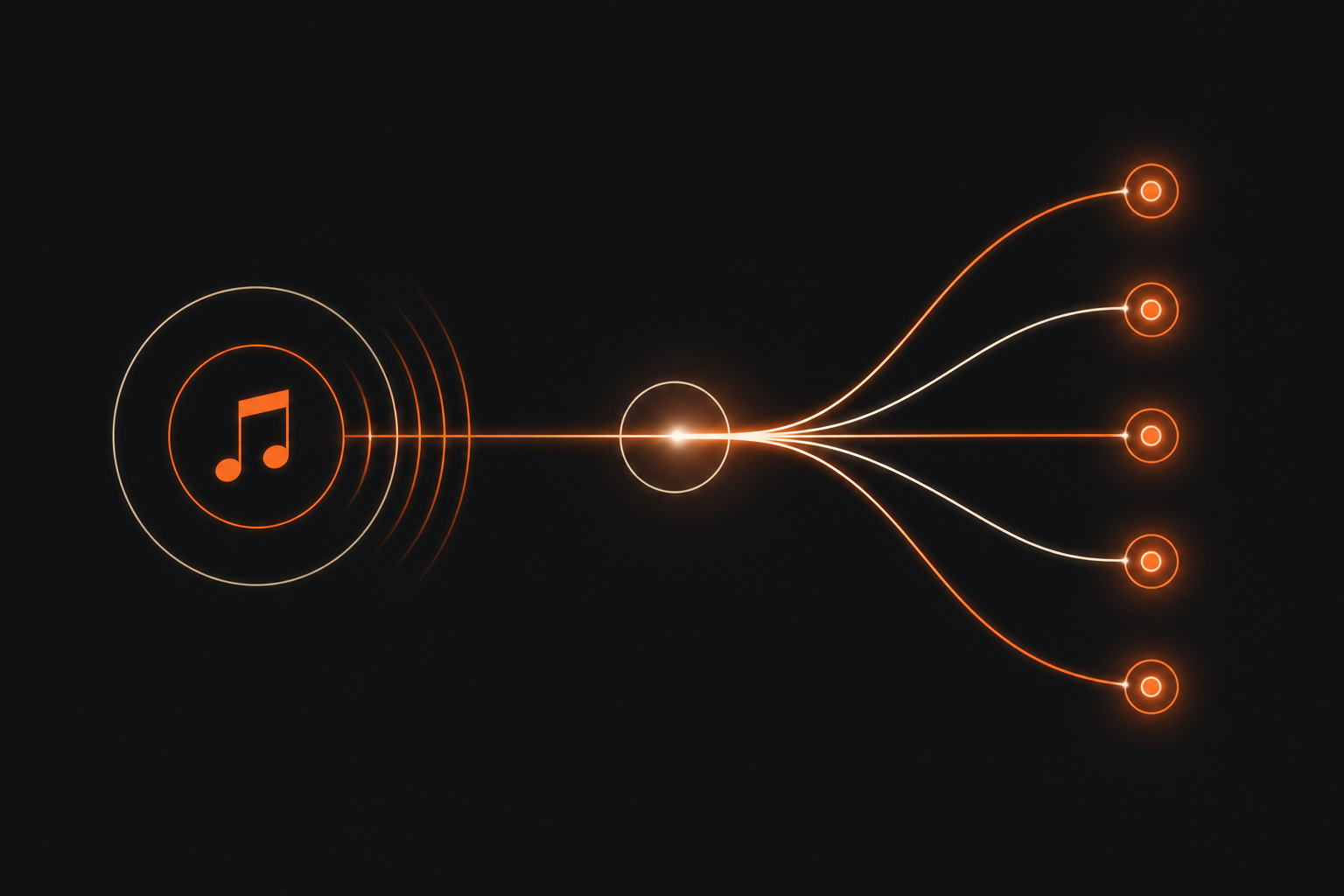
When a song is played publicly, songwriters and music publishers usually earn performance royalties, while recording owners and performers may also be paid depending on how the music is used and local law.
Featured in the Thursday, August 27 edition →
It is often said that buying a song or subscribing to a music service automatically gives a business permission to play it publicly—in fact, personal listening rights usually do not cover public use.
One song can involve several separate rights, so a single public use may create payments for different people through different collection systems. The business, venue, broadcaster, or platform often pays the licensing organisation rather than each creator directly.
Think of a song like a recipe and a recording like a prepared meal: the people who created the recipe and the people who made the meal can each deserve payment when others serve it.
Understanding these separate rights helps explain why artists may receive different payments from radio, streaming, shops, concerts, and social media, even when the same song is involved.
Imagine a café takes out a blanket licence and plays a recorded song for customers. The licensing organisation records or estimates the use and sends the relevant performance royalty to the songwriter and publisher. Depending on the country and the licence, a separate payment may also reach the owner of the recording and eligible performers.
Licences usually start the process
Businesses and platforms commonly obtain blanket licences that let them play many songs while the fees are later distributed to eligible rights holders.
Creators may share ownership
A songwriter can split royalties with co-writers, a publisher, or an employer depending on contracts and how the work was created.
The use changes the payment
A live performance, broadcast, stream, or background play can trigger different rights and payment rules, especially across countries.