Why Local Trouble Moves Global Oil Prices
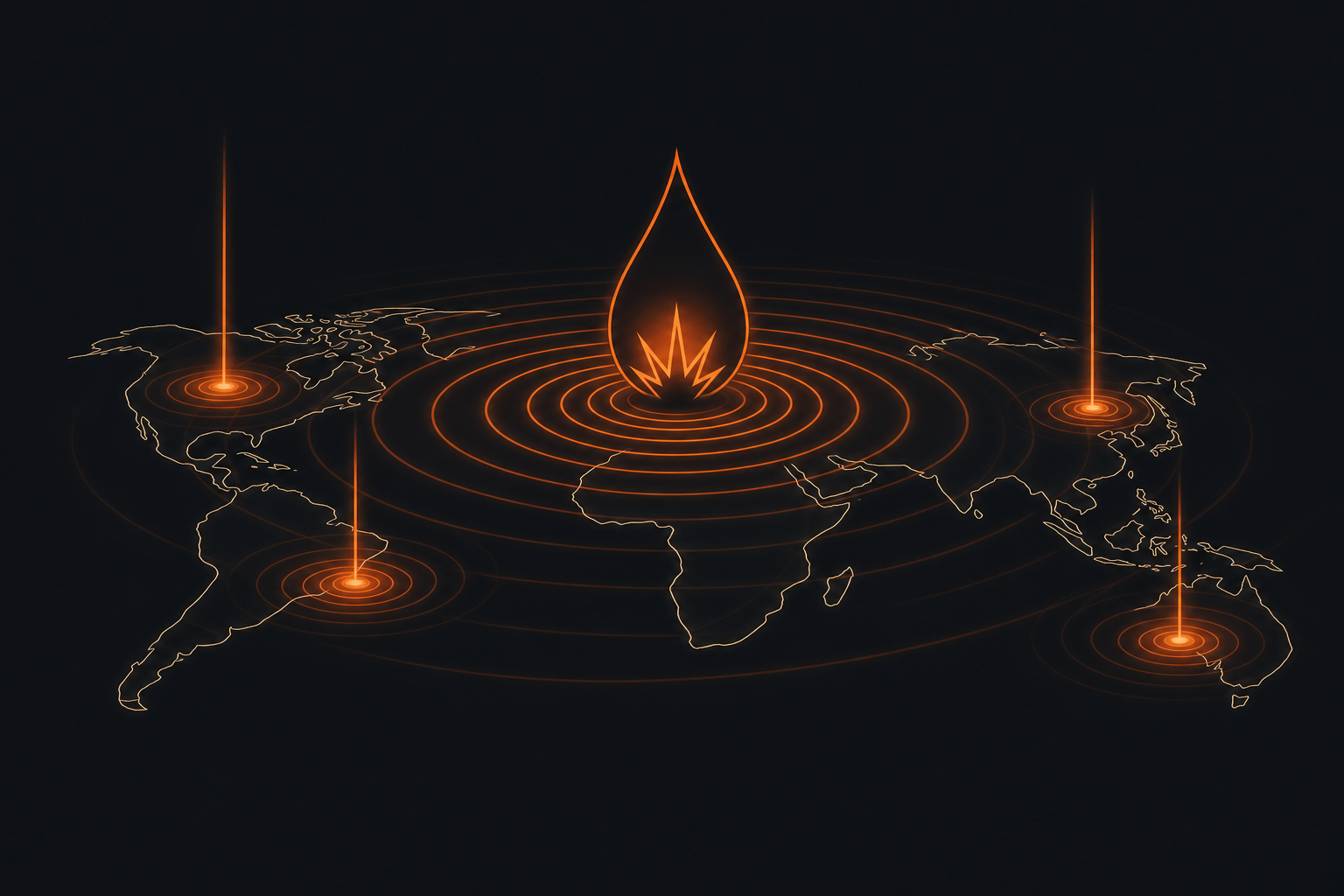
Because oil is traded in a global market, trouble that threatens supply in one place can make buyers everywhere compete for fewer available barrels, pushing up world oil prices.
Featured in the Monday, August 31 edition →
It's often said that oil prices rise only when local pumps run dry — in fact, prices can move as soon as markets expect future supply or shipping problems, even before a physical shortage appears.
Oil moves through a worldwide system of producers, shipping companies, refiners, traders, and fuel sellers, with benchmark prices connecting them. Money ultimately flows toward producers and other firms in the supply chain, while households and businesses often absorb higher costs through fuel and transport prices.
Imagine one big shared bathtub of oil that fills many homes, not separate tubs for each country. If a pipe feeding the bathtub is damaged, everyone worries there may be less water, so people offer more to get their share.
This matters whenever conflict, sanctions, hurricanes, or accidents appear in the headlines, because it helps explain why a distant event can affect fuel bills, delivery costs, inflation, and political arguments at home.
Say the world normally needs 100 barrels and producers supply 100, but a hypothetical disruption threatens 10 barrels. Buyers may bid more for the remaining supply, refiners may search for barrels from other regions, and sellers may hold some back while they judge the risk; the benchmark price can rise even if most deliveries continue normally.
Spare capacity softens shocks
If other producers can quickly increase output, the lost supply is easier to replace and the price impact may be smaller.
Expectations move markets early
Traders price in possible future disruptions, so oil can become more expensive before the threatened supply actually disappears.
Pump prices vary by region
Local taxes, refinery capacity, transport costs, and fuel blends determine how much a global oil move shows up in a particular driver’s bill.