Why Exercise Can Upset Your Stomach
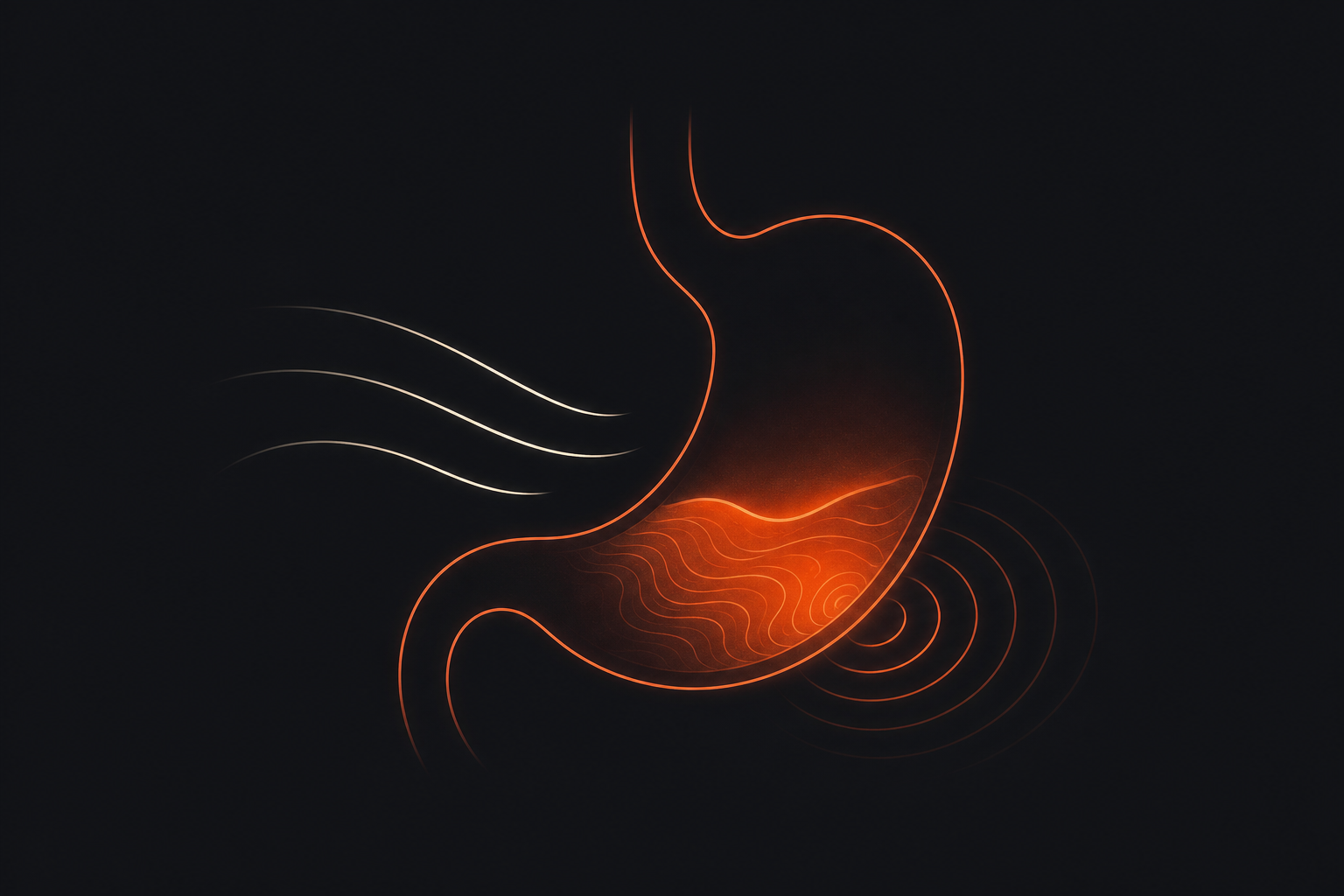
Exercise can cause nausea, cramps, diarrhea, or reflux because your body shifts blood toward working muscles while movement, heat, intensity, and digestion compete for attention.
Featured in the Thursday, September 17 edition →
It's often said that stomach trouble during exercise always means dehydration — in fact, drinking too much, eating too close to exercise, high intensity, heat, and jostling can also contribute.
This is your nervous, circulatory, and digestive systems coordinating under stress, not your stomach acting independently; the body temporarily prioritizes movement and cooling over digestion. The reaction is more likely when several demands—hard effort, food in the stomach, heat, and repeated bouncing—arrive together.
Imagine your body is a small town with one delivery truck: during hard exercise, the truck rushes supplies to your muscles, so the stomach may receive less help for a while, especially when the road is bumpy.
Knowing the common triggers helps whenever you are choosing what and when to eat before a workout, increasing training intensity, or deciding whether a new stomach symptom is ordinary exercise discomfort or something worth checking.
Say someone eats a large meal and starts a hard run soon afterward. Digestion is still underway, while running raises the body's demand for blood and repeatedly jolts the stomach, so the person may feel cramping or nausea; easing the pace and allowing more time after meals may reduce the problem.
Intensity changes the odds
Hard efforts are more likely to trigger symptoms than gentle movement because they place a stronger demand on blood flow and stress hormones.
Food timing matters
Large, fatty, spicy, or high-fiber meals usually take longer to leave the stomach, so they may feel uncomfortable when exercise starts before digestion has progressed.
Your gut can adapt
Gradually practicing fueling and exercise together can help the digestive system become more familiar with the routine, while persistent, severe, or bloody symptoms deserve medical attention.