How Rescue Teams Find Survivors
Rescue teams combine trained search methods, technology, and careful listening to locate people and reach them safely after a disaster.
Featured in the Saturday, August 15 edition →
It's often said that a rescue dog can simply find everyone trapped—in fact, dogs provide useful leads, but debris, weather, and other conditions can limit what they detect, so teams check their clues in other ways.
Search and rescue is a coordinated process that balances speed with safety, because rushing into unstable buildings can put both survivors and rescuers in danger.
It is like looking for a friend who is hiding in a messy room: rescuers search likely places, call out, listen for replies, and use tools to see where people might be.
Understanding the process helps people recognise why emergency instructions, building plans, and clear communication can make rescue efforts more effective.
Imagine a person is trapped beneath a damaged floor after a building collapse. The shortest route is unsafe, so the crew supports the structure, chooses a longer approach, and tells the person what each step will involve. Once the opening is ready, rescuers guide the person through it and out of the building.
Teams divide the search area
Commanders break the disaster zone into sections so crews can cover it systematically and record which places have been checked.
Technology narrows the search
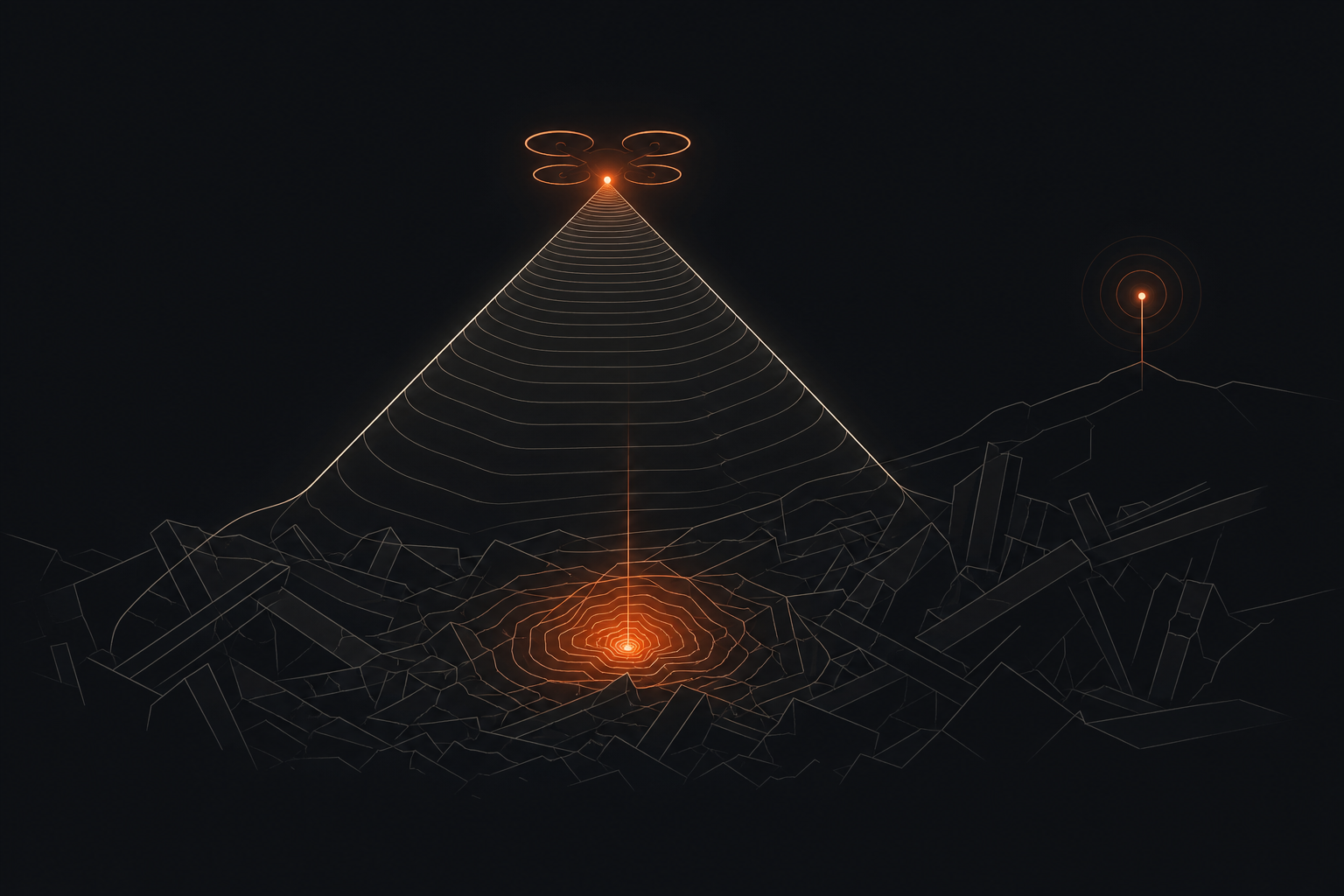
Cameras, listening devices, drones, maps, and specially trained dogs can help locate signs of life where visibility is poor.
Safety shapes every move
Rescuers monitor hazards such as unstable structures, fire, water, and hazardous materials before entering or removing debris.