How Buildings Stay Standing
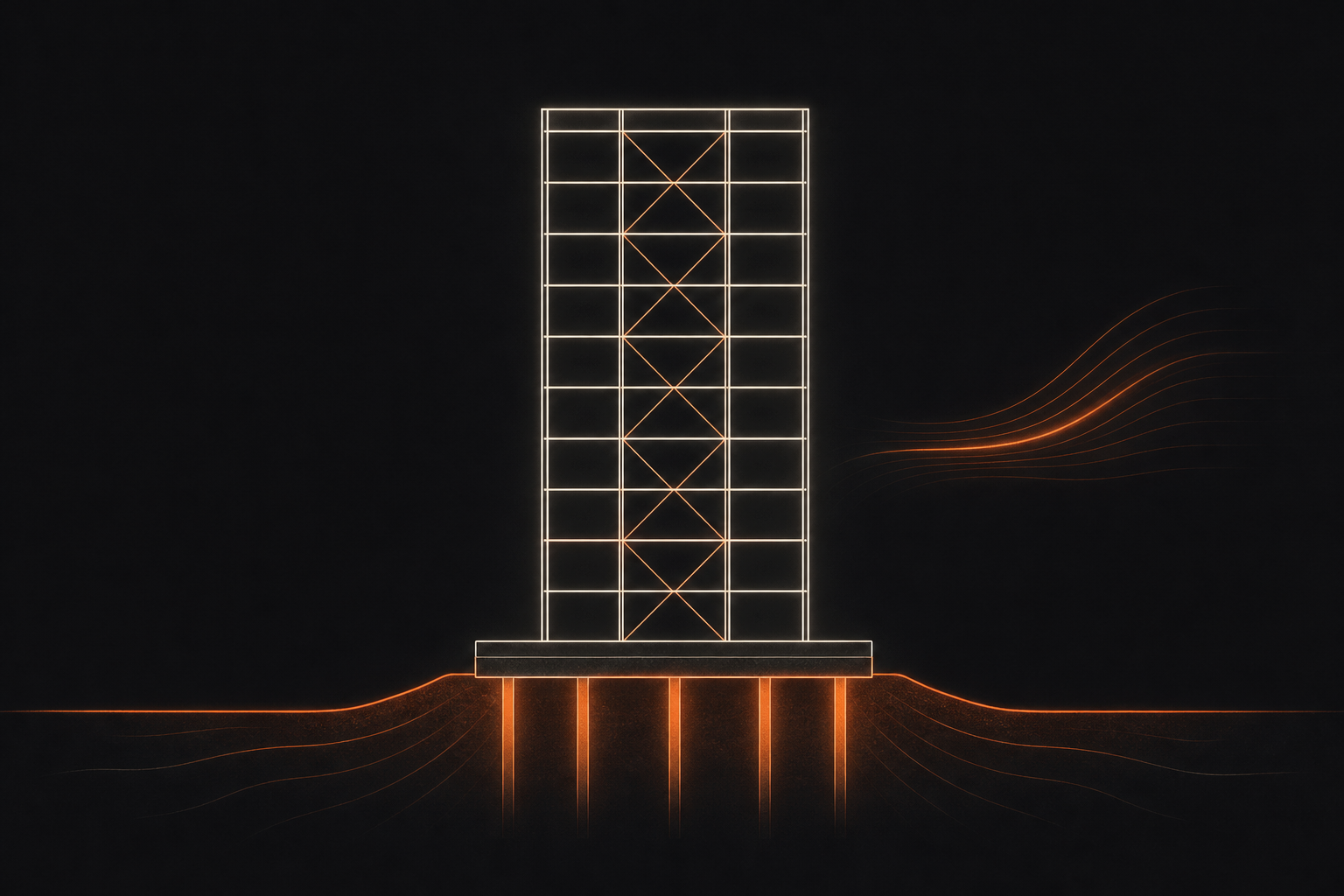
A building stays up because its structure carries weight and pushing forces safely down into the ground through a connected load path.
Featured in the Thursday, October 15 edition →
It's often said that walls alone hold up a building — in fact, different buildings use different combinations of columns, beams, walls, frames, and foundations to share the forces.
Engineers design the structure, builders assemble it, and building codes set safety rules that local authorities enforce; the costs ultimately flow through the owner, lenders, contractors, and people who use the building.
Think of a building like a stack of sturdy blocks sitting on a strong tray: each part passes its weight to the part below until the tray spreads it into the floor. Braces work like your hands holding the stack steady when it is pushed sideways.
Understanding the basic load path helps when reading about skyscrapers, earthquakes, strong winds, building inspections, or debates over construction safety.
Imagine a small roof weighing 1,000 units in a hypothetical example. Beams carry that weight to columns, the columns carry it to the foundation, and the foundation spreads it through the soil; if wind pushes the building sideways, braces or strong walls carry that force down a separate but connected path.
Forces follow a load path
Every major load must travel through connected structural parts, because a weak link can concentrate force and cause damage.
Foundations spread the pressure
A foundation turns concentrated loads from columns or walls into pressure the soil can support without excessive sinking or shifting.
Sideways forces need resistance
Floors and roofs help tie the structure together while braces, rigid frames, or shear walls resist wind and earthquake movement.