How power plants generate electricity
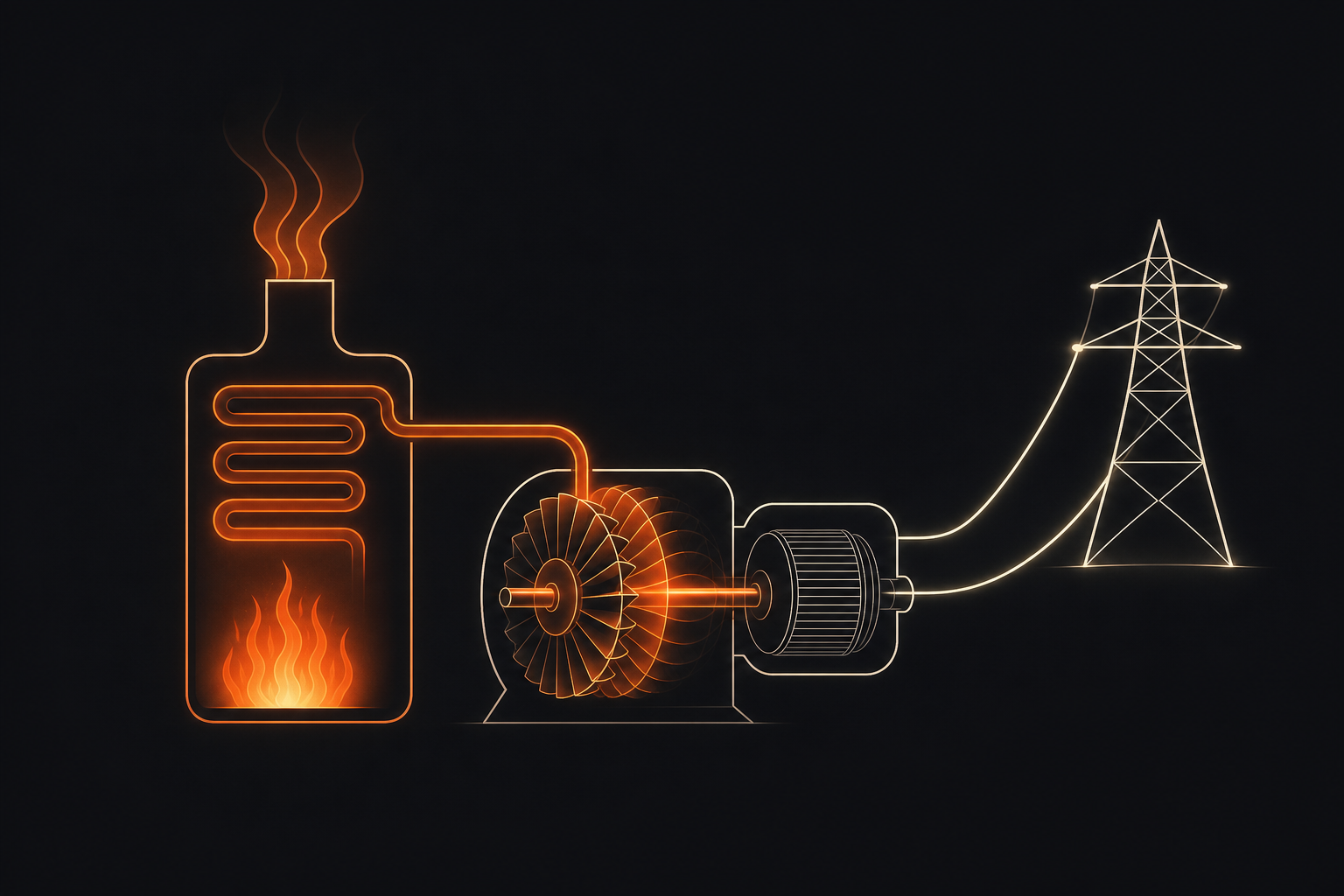
Most power plants make electricity by using energy to spin a turbine, which turns a generator that produces electric current.
Featured in the Monday, September 14 edition →
It's often said that a power plant creates energy from nothing — in fact, it converts energy from fuel, sunlight, moving water, wind, or another source into electrical energy.
Power plants are part of a larger grid managed by utilities and grid operators, which balance electricity supply with demand and deliver it through transmission and local distribution lines. The plant earns money by selling generated electricity or grid services into that system.
Think of a generator like a bicycle light: when the wheels spin, the light comes on, except a power plant spins its “wheel” with steam, moving water, wind, or another force. The generator turns that motion into electricity for wires to carry away.
Understanding the basic chain helps whenever people compare energy sources, discuss power bills, or debate how to make the electricity system cleaner and more reliable.
Say a plant uses fuel to heat water in a boiler. The water becomes high-pressure steam, the steam pushes turbine blades, and the spinning turbine turns the generator, which sends electricity through wires to the grid.
The generator does the converting
Inside the generator, spinning magnets and coils create electric current through electromagnetic induction.
Different plants use different sources
Coal, gas, nuclear fuel, sunlight, wind, and moving water differ mainly in how they provide the energy or motion that drives the generator.
The grid must stay balanced
Power plants adjust their output because electricity must generally be produced as people and businesses use it rather than stored in the wires.