How Rain Turns Into a Flood
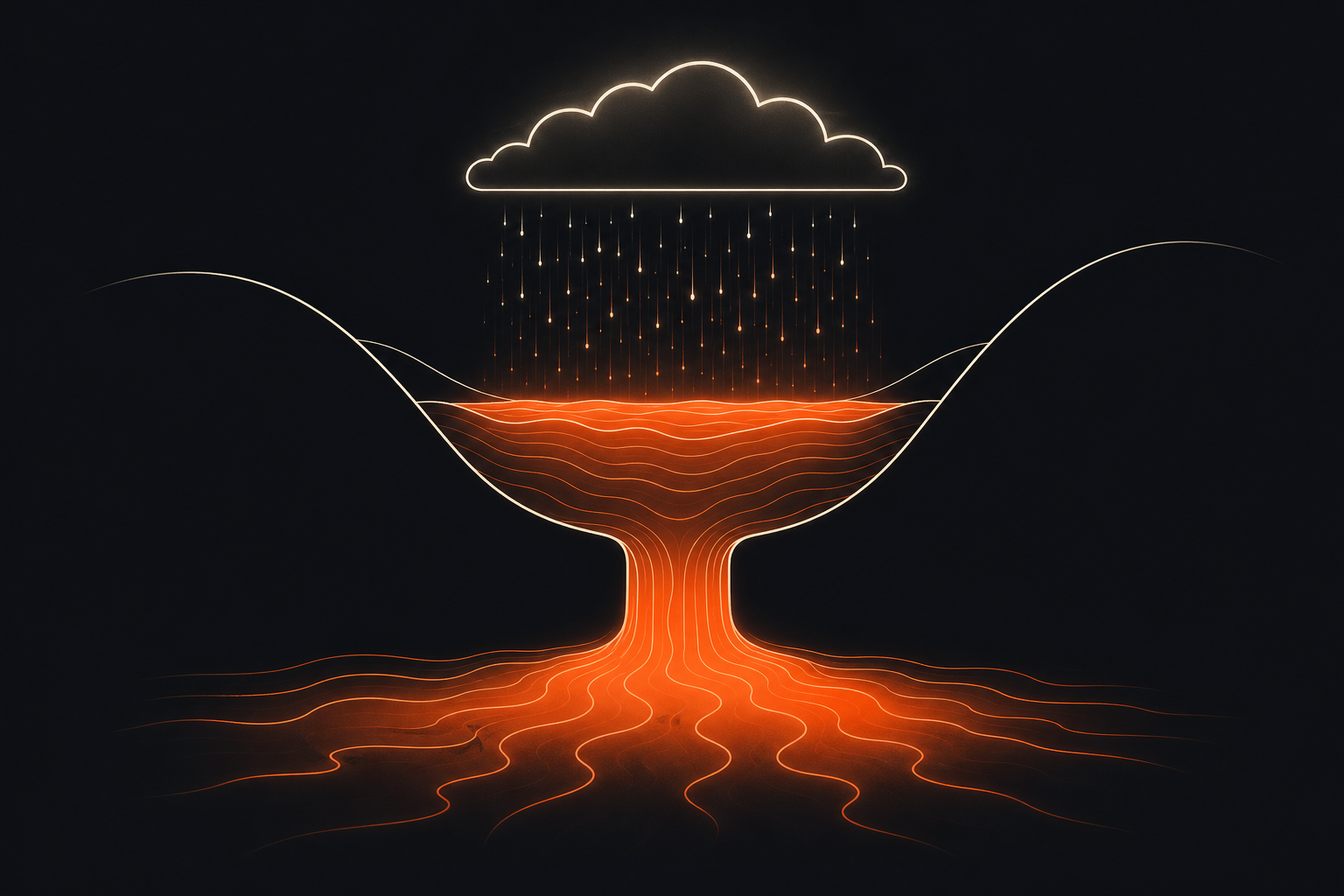
Rain becomes a flood when water arrives faster than soil, drains, rivers, or defenses can absorb or carry it away.
Featured in the Monday, September 7 edition →
It's often said that floods happen only when rivers rise — in fact, streets and neighborhoods can flood when rain overwhelms soil and drains before a river reaches its limit.
Flooding is a watershed problem: water from many streets, fields, and hills can collect in the same low-lying places. Local governments, landowners, and engineers manage parts of this system through drainage, river channels, wetlands, reservoirs, and flood barriers.
Think of the ground and drains as a bathtub's sponge and plug. If water is poured in faster than they can soak it up or let it out, the water spills across the floor.
Understanding the process helps whenever heavy rain is in the forecast or communities are deciding where to build, whether to protect property, or how to prepare for overflowing waterways.
Say a neighborhood receives 100 units of rainwater, but the soil and drains can handle only 60 units during that time. The extra 40 units flow downhill into streets, yards, and low spots, where they may join water from nearby areas and deepen the flooding.
Hard surfaces speed runoff
Roofs, roads, and pavement block water from soaking into the ground, so they send more of it quickly into gutters and channels.
Already-wet ground absorbs less
When soil is full of water, frozen, or tightly packed, new rain is more likely to run across the surface instead of sinking in.
Landscape shape concentrates water
Hills, valleys, storm drains, and river channels funnel scattered runoff into shared low places, sometimes making flooding worse far from where the rain fell.