How Thawing Permafrost Weakens Mountains
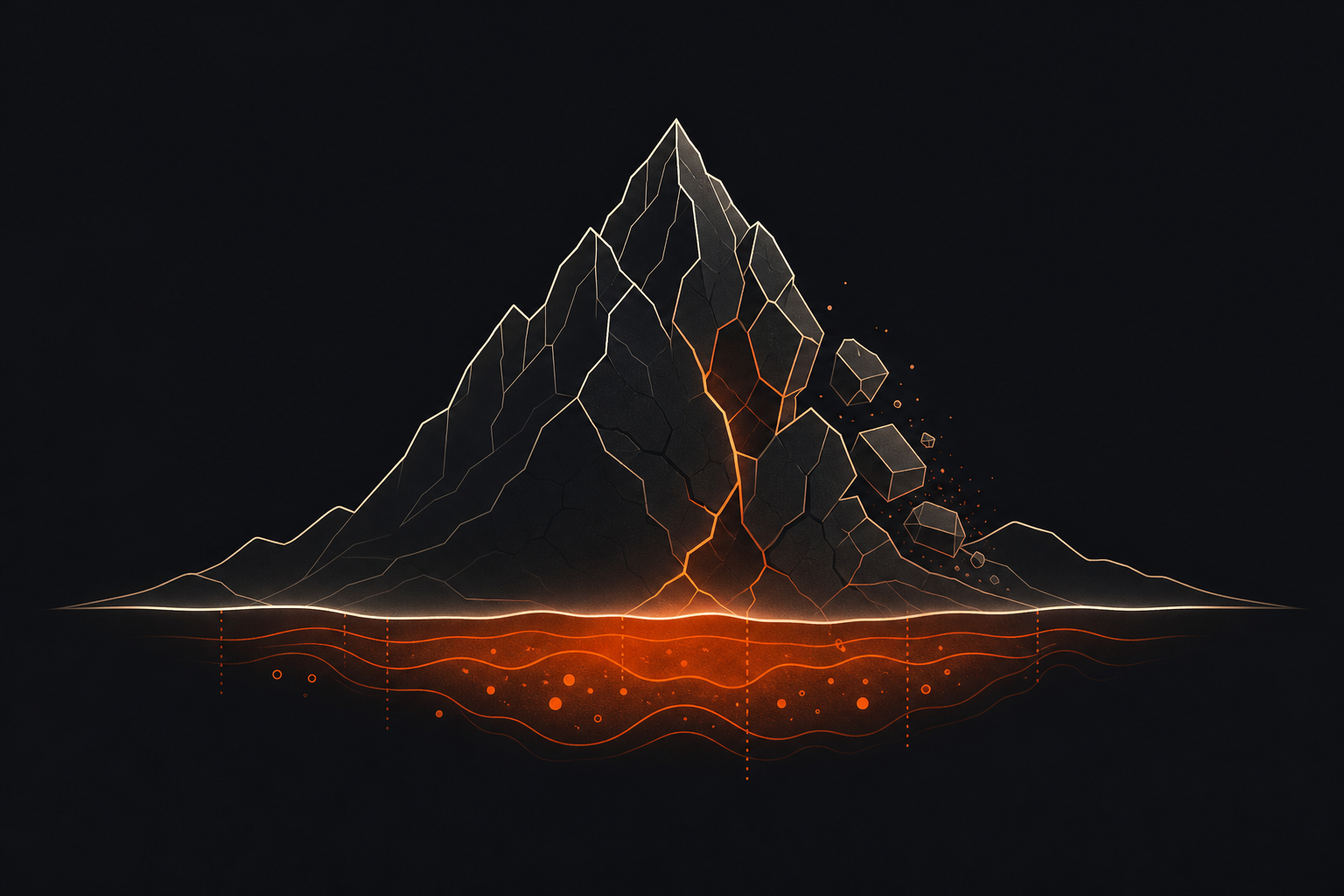
Thawing permafrost destabilizes mountains by removing the frozen ice that cements rock and soil together, while adding water that can help slopes slide or collapse.
Featured in the Tuesday, August 18 edition →
It is often said that permafrost is mainly a feature of flat, polar ground — in fact, it can also hide inside mountain slopes, where frozen patches support rock and soil.
Permafrost can act like hidden structural support inside mountain slopes, so its thaw can turn gradual warming into rockfalls, landslides, and debris flows. The effects may spread beyond the thawing ground by damaging roads, buildings, habitats, and downstream areas.
Imagine a pile of blocks held together by frozen glue: when the glue melts, the pile becomes easier to wobble and fall, especially if it gets wet.
Understanding this process helps explain why mountain hazards can increase even without a dramatic earthquake or storm, and why warming can affect places that seem solid and permanent.
Imagine a road crossing a mountain slope where a hidden frozen patch helps support fractured rock. A warm spell thaws part of the patch, and rain seeps into the newly opened cracks until a block breaks loose; as it moves downhill, it mixes with wet soil and stones and spreads across the road. No earthquake is needed: the sequence is thaw, water entry, release, and downhill transport.
Ice fills cracks and pores
Frozen water can bind loose material and reinforce fractured rock, so thawing removes support from both the surface and deeper parts of a slope.
Water raises sliding pressure
Meltwater can seep into cracks and spaces, increasing pressure and reducing friction along weak surfaces where a slope may already be close to failing.
Failures can become flows
Once rock and soil break loose, additional water can carry the material downhill as a fast-moving debris flow rather than leaving it as a simple rockfall.