Why Sourdough Bread Needs a Starter
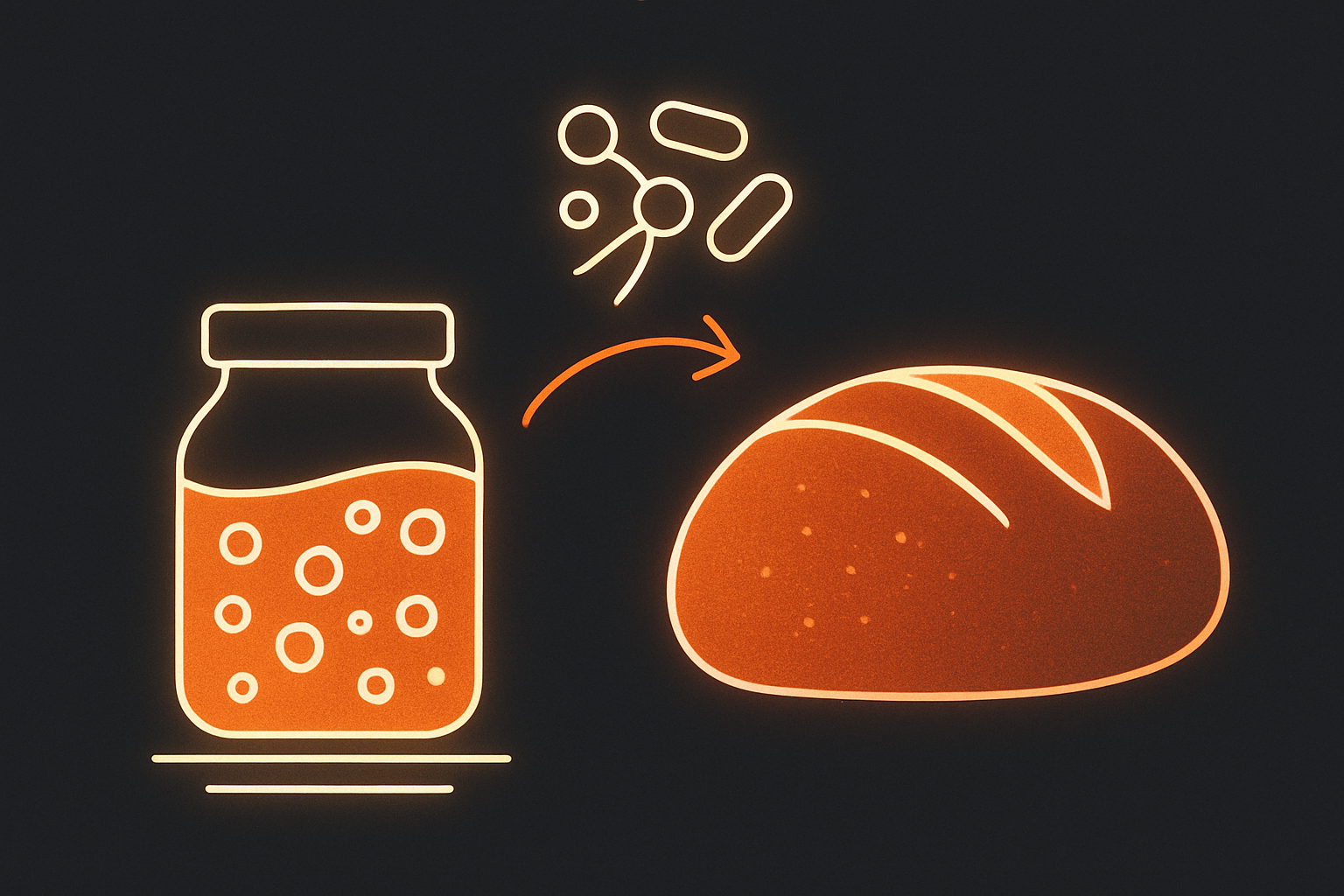
Sourdough bread needs a starter because it contains natural wild yeast and bacteria that help the dough rise and develop its unique flavor.
It is often said that sourdough must be made with starter alone — in fact, bakers can combine starter with commercial yeast when they want its flavor alongside a more predictable rise.
Using a starter instead of commercial yeast connects bakers to traditional methods and creates bread with distinctive texture and flavor that can't be easily replicated.
Making sourdough bread is like planting a tiny garden of good germs that eat the flour and make bubbles, so the bread gets fluffy and tasty.
Knowing how a starter works helps home bakers decide whether to keep one, borrow one, or use commercial yeast when they want more predictable timing. It also makes feeding and storing a starter feel less mysterious.
Imagine a baker keeps 20 grams of active starter and mixes it with 40 grams each of flour and water, making 100 grams for a recipe while preserving the original culture. After it becomes lively, the baker mixes that portion into more flour, water, and salt, and the microbes produce gas throughout the dough as it rests. The baker then shapes and bakes the dough, leaving a small piece behind to feed for the next loaf.
Starters need regular feeding
Adding fresh flour and water gives the yeast and bacteria new food, helping the starter stay active enough to raise dough.
Temperature changes the timing
A warm kitchen usually makes a starter and dough become active faster, while a cooler one slows the process down.
The flavor develops slowly
Giving sourdough dough time to rest lets its natural microbes build the tangy taste and chewy texture many people enjoy.