Why the Ocean Rises and Falls
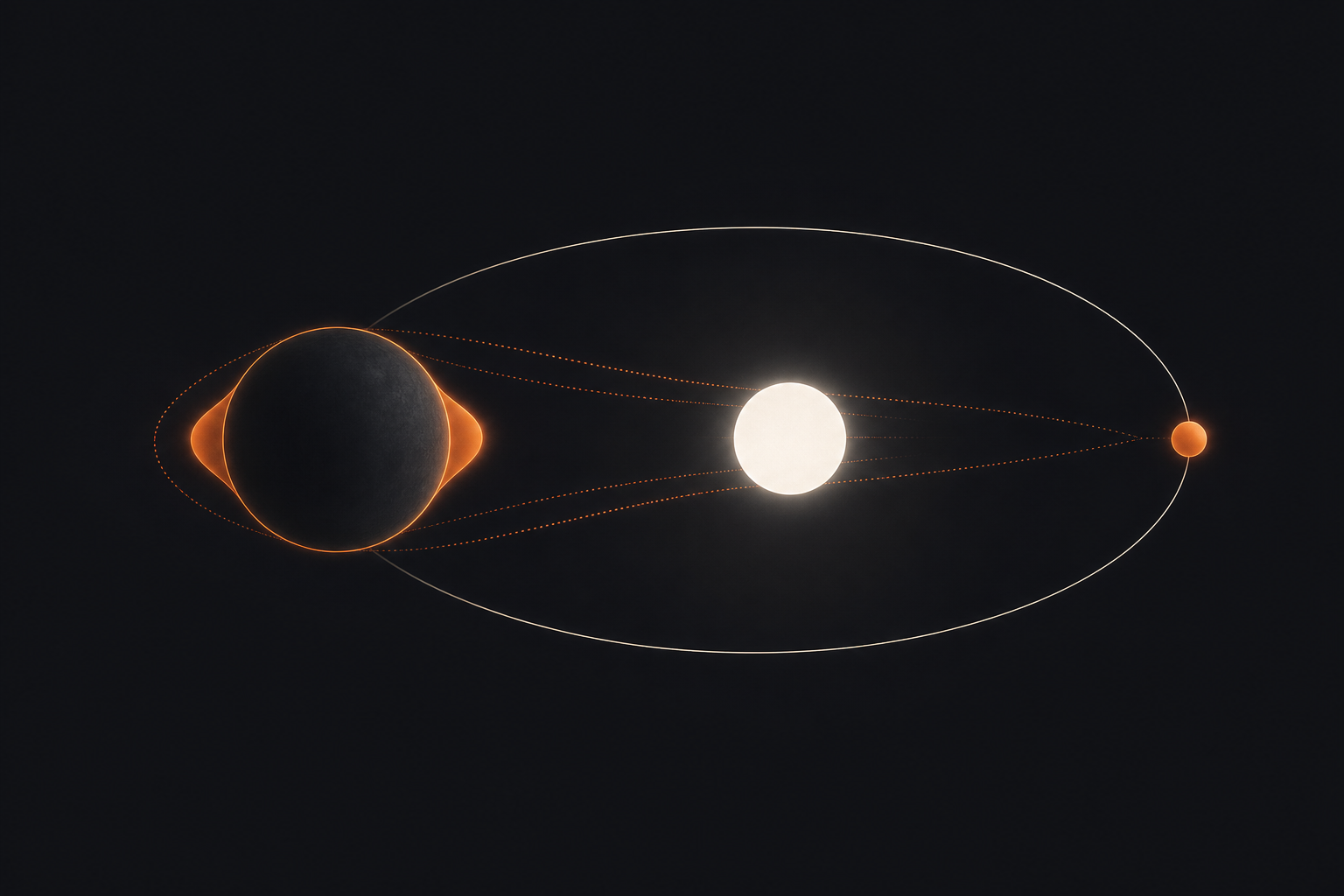
Ocean tides happen mainly because the Moon’s gravity creates two ocean bulges as Earth rotates, while the Sun’s gravity strengthens or weakens the effect.
Featured in the Tuesday, August 11 edition →
It's often said that high tide happens at the same clock time every day—in fact, the Moon's changing position usually shifts the timing later from one day to the next, with local geography changing it further.
Tides are a repeating interaction between gravity, Earth’s rotation, and the shape of the ocean basins. They influence coastal ecosystems, navigation, erosion, and some forms of renewable energy.
Imagine Earth’s oceans as a soft water blanket being gently pulled by the Moon, making little bulges on opposite sides; as Earth spins, different places move through those bulges and experience high and low tide.
Understanding tides helps explain why coastlines change and why the timing and height of tides vary from place to place, rather than following one simple worldwide schedule.
Imagine a tide table predicts a high tide during a coastal storm. Strong winds push extra water toward shore, and low air pressure lets the sea surface rise, so the actual water level can climb higher than the tide prediction alone; a coastal planner must consider both the tide and the storm.
The Moon pulls unevenly
The side of Earth facing the Moon is pulled more strongly than Earth’s centre, while the far side moves relatively away from the Moon, producing the second bulge.
The Sun changes tide strength
When the Sun, Moon, and Earth line up, their pulls combine for larger tidal ranges, while positions at roughly right angles produce smaller ranges.
Coastlines reshape the pattern
Continents, bays, seafloors, and narrow inlets can amplify, delay, or reduce tides, which is why local tide times and heights differ greatly.