How automatic doors sense people
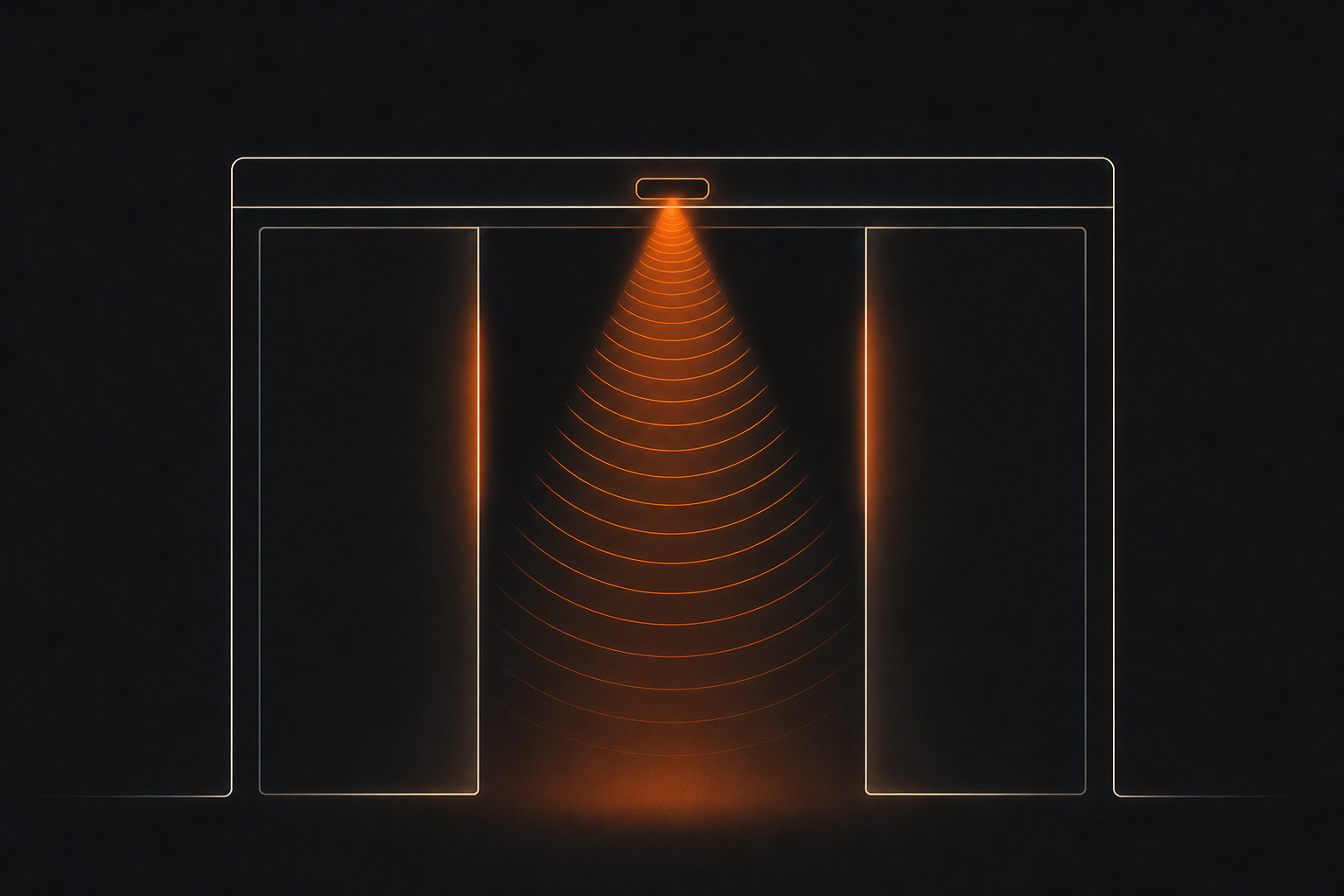
Automatic doors open when sensors detect someone approaching and a controller tells the motor to move the door safely.
Featured in the Friday, October 9 edition →
It’s often said that automatic doors know exactly who is walking through — in fact, most simply detect movement, presence, or pressure and do not identify people.
An automatic door is one small part of a building’s access and safety system, connected to a controller that coordinates sensors, motors, locks, and emergency settings.
It is like the door has invisible eyes and a tiny brain: the eyes notice you, and the brain tells the door to slide or swing open.
Understanding the basics helps whenever you encounter doors that open slowly, fail to respond, or stay open, because the cause may be sensing, timing, or a safety feature rather than a broken motor.
Imagine a person walks toward a store entrance and an infrared or radar sensor notices movement in its detection area. The controller checks that the doorway is safe, then powers the motor to open the door. After the person passes, the sensor stops detecting activity and the controller closes the door after a short programmed delay.
Different sensors notice different clues
Some doors use radar for movement, infrared beams for presence, pressure mats for weight, or combinations of these methods.
Safety sensors prevent collisions
Sensors near the doorway can tell the controller to pause, reopen, or prevent closing when a person or object is in the way.
The controller sets the behavior
A small control unit decides when to open, how fast to move, how long to wait, and what to do if a sensor or motor behaves unexpectedly.